If you have searched for what is on my wrist while staring at a glowing watch face, you are probably asking one of two questions: what device am I wearing, or what does this number mean? After eight years wearing more than 30 smartwatches, fitness trackers, and smart rings, I can tell you that both questions deserve a calm answer. Most wrist technology is useful, some of it is noisy, and very little of it deserves panic.
I spent eleven years in cardiac rehabilitation, where people often worried about a single heart-rate reading taken at the wrong moment. A wearable can provide helpful patterns, but it cannot replace symptoms, clinical judgment, or a proper medical test. My rule remains simple: trust the trend, not the reading.
First, identify the thing on your wrist
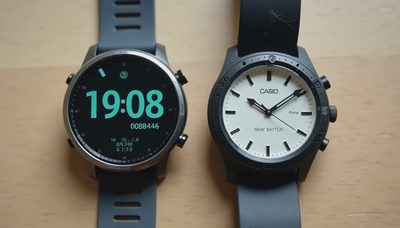
The object itself is usually one of four devices. A smartwatch, such as an Apple Watch, Samsung Galaxy Watch, or Google Pixel Watch, combines notifications, exercise tracking, heart-rate sensing, and apps. A fitness watch from Garmin, COROS, or Polar focuses more heavily on workouts, GPS, training load, and battery life. A simpler fitness tracker, including products from Fitbit, often emphasizes steps, sleep, and daily movement. A smart ring, such as an Oura Ring, moves the sensors from your wrist to your finger but records many of the same signals.
Look for a logo, model name, charging shape, or companion app. Apple devices pair with the Apple Watch app on an iPhone. Garmin watches use Garmin Connect, while Fitbit devices generally use the Fitbit app. If you still cannot identify it, photograph the back and search the printed model number. That is more reliable than guessing from the screen design.
The question what is on my wrist sometimes comes from a skin mark rather than a gadget. A red band, indentation, or itchy patch can result from sweat, friction, soap, or a strap worn too tightly. Remove the device, wash and dry the area, and give your skin time to recover. Persistent pain, swelling, blistering, or a spreading rash deserves medical advice.
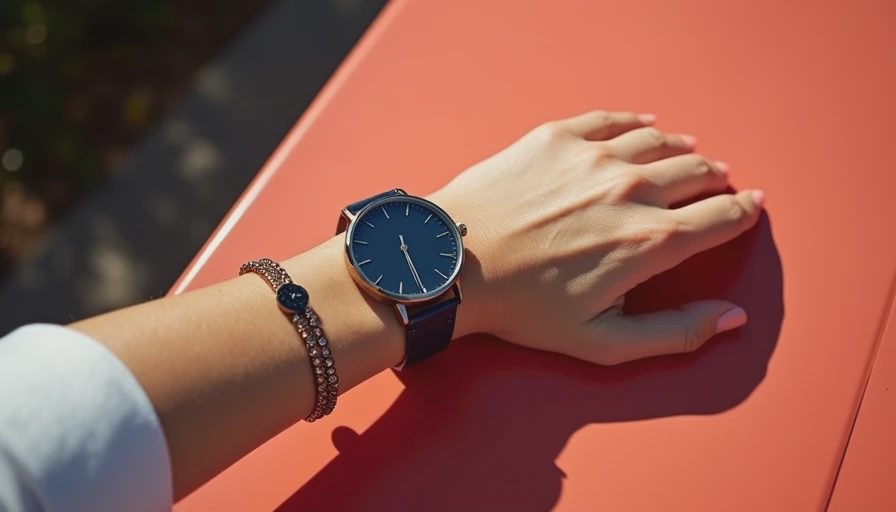
What the sensors are actually measuring
The small lights on the back of many watches are optical sensors. They shine light into the skin and estimate changes in blood volume as your heart beats. This is called photoplethysmography, or PPG. It supports everyday heart-rate readings, resting heart rate, and sometimes blood oxygen estimates. Motion, a loose strap, cold skin, tattoos, and sweat can all reduce consistency.
An accelerometer detects movement and helps estimate steps, pace, and activity. A gyroscope notices rotation, which helps a watch understand wrist position and exercise motion. GPS estimates location and distance outdoors. A skin-temperature sensor tracks changes at the device or skin surface, not a complete body temperature in the way a clinical thermometer does.
Some Apple Watch and Samsung models include an electrical sensor for an electrocardiogram, or ECG. You place a finger on the crown or designated contact, and the device records electrical signals for a short period. That can be useful in specific situations, but it is not a full diagnostic examination. A normal result also does not explain every kind of chest discomfort, dizziness, or shortness of breath.
Which numbers deserve your attention?
For most healthy adults, the useful readings are the ones that help answer a practical question. Is your easy run actually easy? Are you moving more during the workday? Are you sleeping long enough to function well? Is your resting heart rate staying close to its usual range?
Resting heart rate is most useful when measured under similar conditions, often during sleep or shortly after waking. One unusually high value could follow poor sleep, dehydration, alcohol, stress, illness, or a hard workout. A repeated change, especially with symptoms, is more meaningful than one dramatic spike.
Heart-rate variability is another popular metric. In simple terms, it describes small timing differences between heartbeats. It can shift with training, sleep, stress, illness, and measurement conditions. I would not change a training plan because of one low HRV score. I would look at several days of data alongside sleep quality, mood, and how the warm-up feels.
Calories are the least trustworthy number on most wrist devices. They are estimates based on movement, heart rate, body information, and algorithms. Use them to compare similar workouts over time, not to justify a precise meal or judge your effort. The calorie count is rarely the most useful answer to what is on my wrist.
How to read sleep and recovery data
Sleep features can show bedtime, wake time, estimated sleep duration, and periods labeled light, deep, or REM sleep. Total time in bed and a consistent schedule are generally more actionable than the exact minute your watch says you entered deep sleep. Wrist sensors infer sleep stages from movement and heart-rate patterns; they do not directly observe brain waves.
Recovery scores combine several inputs, usually resting heart rate, HRV, recent activity, sleep, and sometimes stress estimates. Treat the score as a prompt, not a command. If the app says you are ready but your legs feel heavy and your warm-up is poor, ease back. If the score is low after a restless night but you feel normal, choose an easy session rather than abandoning movement entirely.
When friends ask what is on my wrist after seeing a recovery score, I explain that the watch is offering a model of my recent state. It is not announcing a diagnosis. A good device should help you notice patterns without making you anxious about ordinary biological variation.
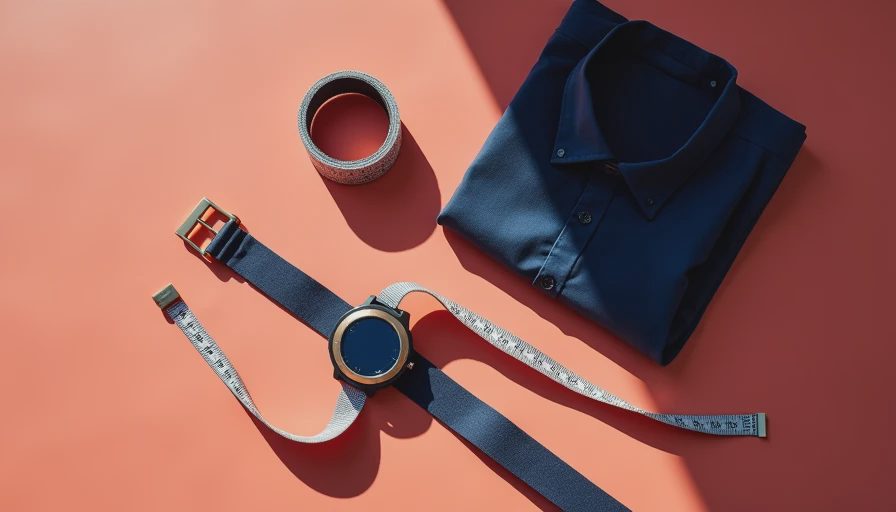
A five-minute check when a reading looks strange
Start by checking the fit. Wear the watch snugly, about a finger’s width above the wrist bone, especially during exercise. Clean the sensor and remove sweat or lotion. Next, compare the reading with how you feel and with a manual pulse count or another device. If your heart rate suddenly reads 190 during an easy walk but you can speak comfortably and a manual check is much lower, the watch may have lost contact.
Review the activity type and GPS conditions. A watch can mistake cadence for heart rate during running, while tall buildings and tree cover can affect distance. Confirm that your profile contains a reasonable age, height, weight, and maximum heart rate. Do not repeatedly refresh the screen looking for reassurance; that turns a useful tool into a source of stress.
Get urgent help for severe or persistent chest pressure, fainting, serious breathing trouble, or symptoms that feel dangerous, regardless of what the watch says. A wearable cannot clear you when your body is sending a strong warning.
Choosing better wrist technology
When deciding what is on my wrist for the next training block, I start with the behavior I want to support. Runners who need detailed workouts and long battery life often prefer Garmin or COROS. People already using an iPhone may value the Apple Watch’s calls, messages, safety features, and health integration. Fitbit can suit someone who wants straightforward activity and sleep tracking. Oura is appealing if sleep and recovery matter more than live workout data.
You do not need the flagship model to get a reliable daily heart-rate trend, step count, or basic sleep estimate. A previous-generation Apple Watch, midrange Garmin, or affordable Fitbit often does the job for substantially less than $400. Spend extra only for a feature you will use, such as offline maps, multisport support, cellular service, or advanced training tools.
The best answer to what is on my wrist is not always the most expensive answer. It is the device that stays comfortable, records consistently, and changes a sensible decision. Wear it for a few weeks before judging it. Learn its habits, compare its readings with your lived experience, and remember the phrase I use with runners: trust the trend, not the reading.

No letters yet — pray write the first.