The Current Pairing
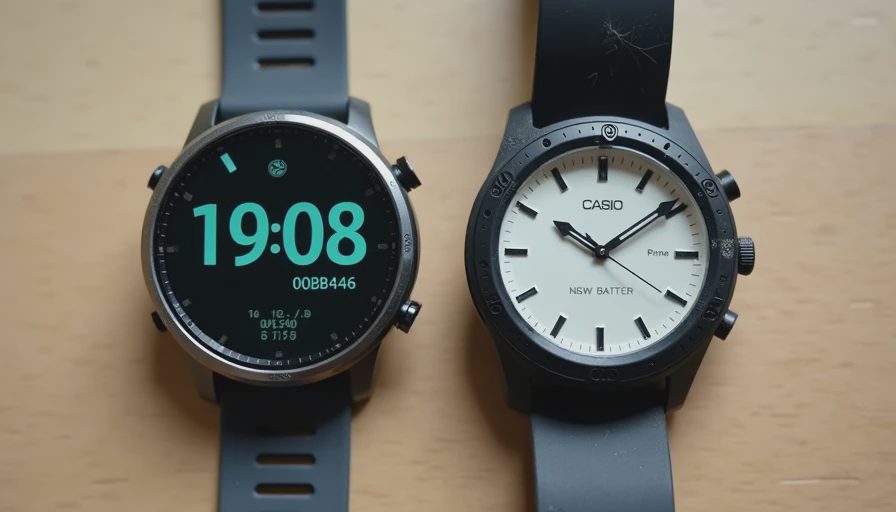
Left wrist: a mid-range GPS running watch that has been on continuous duty for five weeks now. Right wrist: the familiar scratched Casio that has outlasted more expensive devices than I can easily count. Same two-watch rule as always. One collects the data. The other keeps me honest.
I get asked about the setup often enough that it feels worth a regular public note. Not a polished review. Just the plain state of the wrists this month—what is earning its place and what is starting to show its limits.
The Smartwatch Side
The current test unit is handling daily life without drama. Battery is still landing in the seven-to-nine-day range with overnight tracking left on. Optical heart rate looks consistent on easy and steady runs. Sleep data is usable when I look at the multi-night picture instead of any single morning score. GPS has been clean enough on the usual trail and road routes around Eugene.
A few small irritations have appeared. The silicone band collected more lint and sweat residue than I expected and needed a deeper clean twice already. The always-on display is convenient but I keep turning it off to protect battery on longer travel days. And the recovery metric continues to be more confident than the underlying data always justifies—classic case of a clear number that still needs human interpretation.
Nothing has broken. Nothing has made me want to take it off. That is the quiet standard for a device mid-test: it disappears into the day until I actually need the information.
The Casio Side
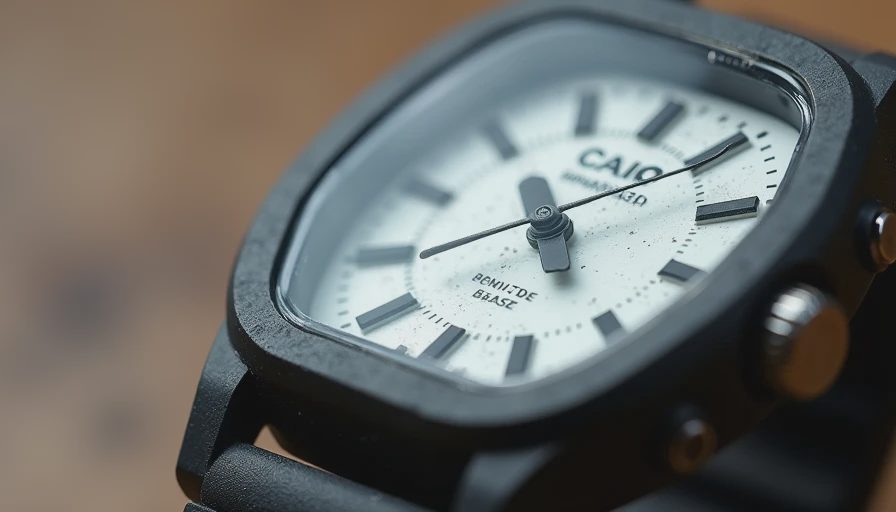
The Casio continues to do the only job it was given. It tells time. The second hand still sweeps. The crystal has a few new light scratches from the usual door frames and trail brush. The resin band is slightly more polished from wear but shows no cracks. I have not changed the battery since it went on the wrist months ago.
Its real function remains psychological. When the smartwatch offers a soft recovery score or an elevated overnight reading, the Casio simply sits there showing that the day is still moving forward at the same pace. That small visual contrast is often enough to keep me from over-reacting to a single data point.
Why the Dual Setup Still Wins
I have tried periods with only the smartwatch. The data is richer, but the temptation to check it more often rises. I have tried periods with only the Casio. Life is calmer, yet I miss the resting-heart-rate trend and the easy ability to glance at pace on longer runs. The combination still feels like the better compromise.
The expensive watch answers the questions worth asking: Is resting heart rate drifting? Is the training load showing up in overnight recovery over the course of a week? Can I trust the GPS for a new route? The cheap watch answers the question that matters more than any of those: Do I actually need to look at the numbers right now?
Most mornings the answer is no.
Small Observations From This Month
Toddler resistance testing continues. The current smartwatch band survived another determined pull without stretching out of shape.
Pool sessions have produced no fogging or sensor issues so far.
I still take the smartwatch off for a few hours on heavy homebrew or bike-restoration evenings when I know I will not look at the data. The Casio stays on.
One firmware update arrived and changed nothing I could notice in daily use. That is the ideal outcome.
The Ongoing Experiment
This is not a permanent review of any single model. Devices rotate. The Casio stays. The point of the monthly note is simply to keep the experiment visible: one wrist collecting careful data, the other providing the control that data always needs.
If the current smartwatch is still performing the same way at the ninety-day mark, it will earn a longer write-up in the Long Test series. Until then it remains daily equipment—useful, imperfect, and kept in perspective by a twenty-dollar analog that refuses to care about scores.
Trust the trend, not the reading. This month both watches are doing their jobs.

No letters yet — pray write the first.