If you have ever wondered why wear two watches when one device seems to cover the basics, the answer is usually less strange than it looks. One watch handles notifications, heart rate, GPS, and workouts. The other provides dependable timekeeping, better battery life, or simply a little visual balance. I have spent years wearing a smartwatch on one wrist and a $20 Casio on the other, and the arrangement is more practical than flashy. It also makes clear which information helps and which information is just noise.
The practical reasons people wear two watches
The strongest reason to wear two watches is that different devices solve different problems. A Garmin Forerunner, Apple Watch, or COROS Pace can record a run, estimate recovery, show pace, and provide navigation. A basic analog watch or digital Casio can keep displaying the time when the smart device is charging, updating, or buried under a sleeve.
Battery life is another straightforward benefit. A smartwatch might need charging every day or every few days, especially when GPS, music, and an always-on display are active. A quartz watch can run for months or years on one battery. A mechanical watch needs no battery at all, although it will eventually need winding or servicing. When I am traveling, the simple watch becomes a low-maintenance backup rather than another gadget demanding attention.
There is also the question of context. A runner may want detailed data during a workout but no buzzing wrist during dinner. Wearing two watches lets that person keep a training device available while using the regular watch as the one that actually gets looked at. That sounds excessive until you have tried to read a notification while carrying groceries or coaching a group at a track.

Why wear two watches for running and training?
For runners, why wear two watches often comes down to protecting the training routine from technology problems. GPS watches are useful, but satellites can take time to lock, batteries can run low, and software can occasionally behave badly. A simple watch gives you a visible time reference for an interval, a meeting, or the planned duration of an easy run even if the sports watch is turned off.
A second device can also provide a useful comparison. I have worn a Garmin on one wrist and an Apple Watch on the other during ordinary runs, not to declare a winner, but to see whether the broad trend was consistent. Pace and heart-rate readings do not always match second by second. That is normal. Optical sensors respond to fit, motion, temperature, skin contact, and arm position. Trust the trend, not the reading.
The key is not collecting more numbers. If both watches show nearly identical heart rate but one reports a dramatically different calorie total, the disagreement does not automatically mean your body changed. Calories burned are estimates based on personal data and algorithms. For training, duration, perceived effort, pace, and recovery habits often matter more than arguing over a small numerical difference.
Health data, reassurance, and the limits of a second watch
Some people search why wear two watches because they hope two readings will make health data more certain. Usually, they do not. Two wrist sensors are not the same as a clinical measurement, and a second watch cannot diagnose a heart condition, confirm illness, or replace professional care.
Heart-rate readings can vary between devices because each brand uses different hardware and filtering. Sleep scores can disagree because watches infer sleep stages from movement and heart-rate patterns rather than directly observing the brain. More screens can therefore create more opportunities to worry. In my cardiac rehab years, I saw how quickly a single unexpected number could distract someone from the symptoms and context that mattered more.
Use a second wearable to identify patterns, not to chase perfect agreement. If your resting heart rate is usually in one range and remains elevated for several mornings alongside poor sleep, unusual fatigue, or a clear change in how you feel, that pattern deserves attention. A single odd reading deserves a fit check and a calm review before it deserves a dramatic conclusion.

Style, work, and the control-watch idea
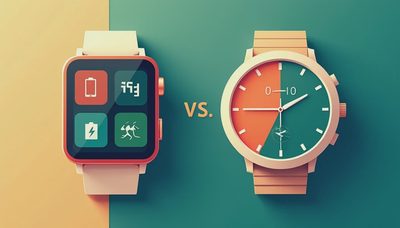
There is a style reason why wear two watches remains popular. A smartwatch often looks sporty and modern, while a field watch, dress watch, or compact digital model works better with office clothing. Wearing both can be a deliberate contrast: practical technology on one wrist and a watch with character on the other. It is not for everyone, but neither is wearing running shoes with business-casual clothes.
The second watch can also act as a control. My inexpensive Casio does not measure stress, readiness, blood oxygen, or sleep. It tells time. That simplicity is valuable because it reminds me that a wearable is a tool, not a scorecard. If I am checking a recovery dashboard repeatedly but not sleeping more, reducing training load, or changing a habit, the dashboard is not helping.
For professionals, a basic watch may be preferable in meetings where a glowing screen and incoming alerts create an unwanted distraction. For parents, travelers, and outdoor workers, a durable watch can provide timekeeping without the worry of scratching an expensive device.
How to choose a useful two-watch setup
Start with the job each watch must perform. If the smartwatch is for running, select a second watch for battery life and easy time reading. A Casio, Timex, or inexpensive quartz field watch can cover that role for roughly $20 to $150. If the smartwatch is mainly for notifications, pair it with a mechanical or quartz watch that suits your clothing and daily routine.
Avoid buying a second device simply because a review lists another feature. Compare the actual overlap. Two watches that both track steps, sleep, and heart rate may double your charging and data-checking without improving decisions. A smartwatch plus a simple timepiece usually creates a clearer division of labor.
Fit matters as well. Keep both watches snug enough that they do not slide, but not so tight that your hand tingles or your skin becomes irritated. On a workout, wear the sensor where its instructions recommend, generally above the wrist bone, and clean sweat from the back afterward. Comfort determines whether the setup survives real life.
Is wearing two watches worth it?
Why wear two watches if you want a single clean answer? Do it when the arrangement solves a real inconvenience: charging, durability, notifications, training backup, or clothing. Skip it when the second device only encourages constant comparison or makes your wrists uncomfortable.
My own setup works because each watch has a narrow assignment. The smartwatch records workouts and occasionally gives me useful prompts. The Casio shows time, survives rain and bike maintenance, and never asks me to interpret a score. That is enough. You do not need two premium devices, two overlapping subscriptions, or a wrist full of metrics to train intelligently.
The best setup is the one that changes what you do for the better. If two watches help you run with less friction and check your phone less often, they are practical tools. If they turn every heartbeat into a question, simplify. The goal is not to measure everything. It is to notice the trends that support better decisions and leave the rest alone.

No letters yet — pray write the first.