The casio vs smartwatch decision looks simple until you wear both for a few weeks. One gives you dependable time, a timer, and a battery that seems to outlive the family car. The other tracks workouts, sleep, notifications, heart rate, and sometimes more data than you can interpret before breakfast. I have spent years wearing both, including a $20 Casio on one wrist as a control, and the answer is less glamorous than most buying guides suggest: choose the tool that changes your behavior in a useful way.
For many people, the casio vs smartwatch question is not really about old technology versus new technology. It is about attention, maintenance, and whether health data helps you act or simply gives you another screen to check. A runner training for a race has different needs from someone who wants a durable watch for yard work, travel, or weekend hikes.
What a Casio actually does well
A basic Casio is hard to improve because it solves a small problem extremely well. It tells time, sounds an alarm, counts down a timer, and often includes a stopwatch. Models such as the F-91W cost roughly $15 to $25, while tougher G-Shock options commonly range from about $50 to more than $150. Many run for years on one battery, and a cracked display usually does not turn into a software problem.
That simplicity matters during exercise. When I am coaching a group run, I can glance at a stopwatch without reading a message, approving an update, or wondering whether the watch has correctly identified my activity. A Casio also handles sweat, rain, cold mornings, and being tossed into a gym bag with little fuss. It does not measure recovery, but it does not pretend that one restless night explains your entire week either.
The limitation is equally clear. A Casio cannot record a route, estimate training load, show incoming calls, or build a sleep report. It will not remind you to stand up or buzz when your pace drifts. If you need structured workout guidance or want to review patterns over time, its usefulness ends quickly.
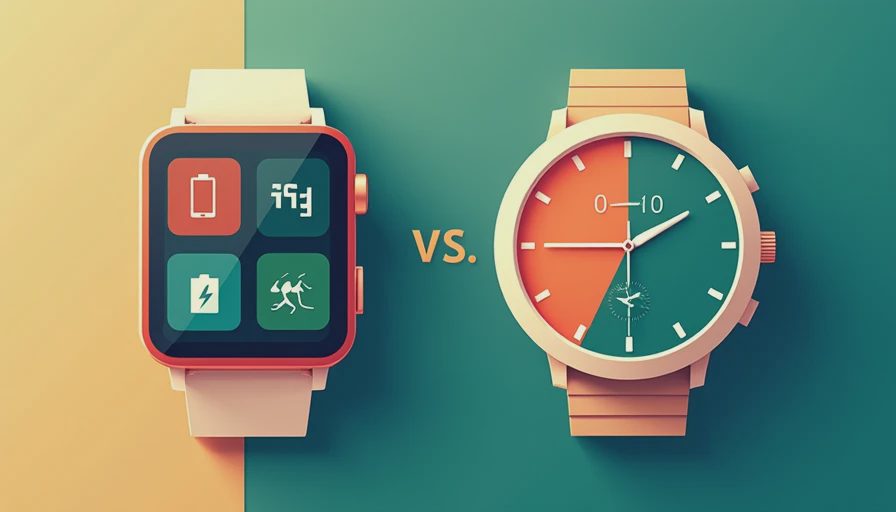
What a smartwatch adds to everyday life
A smartwatch earns its price through several small conveniences rather than one magical feature. A Garmin Forerunner can record GPS runs and display pace zones. An Apple Watch works closely with an iPhone for calls, messages, payments, and workout recording. A Samsung Galaxy Watch offers a similar connected experience for many Android users. Fitbit models often focus on approachable activity and sleep tracking.
In the casio vs smartwatch comparison, the strongest argument for a smartwatch is feedback while you are doing something. A vibration can remind you to move during a long workday. A run alert can keep an easy workout from becoming an accidental race. A phone-free route, timer, or music control can make a workout feel less interrupted. These are practical improvements, not just attractive specifications.
Health metrics require a calmer interpretation. Wrist heart-rate sensors can be useful for observing effort during steady exercise, and sleep duration can reveal a consistent schedule problem. Neither is a diagnosis. Skin contact, movement, temperature, stress, and device algorithms affect readings. If a watch shows an unusual number while you feel unwell, respond to your symptoms and seek appropriate medical help rather than staring at the screen.
Battery, durability, and cost over time
The casio vs smartwatch decision often becomes clearer when you calculate ownership instead of looking only at the purchase price. A $20 Casio may need an occasional battery replacement, but it has no charging cable to lose and no subscription prompt. Some fitness watches last a week or more between charges; feature-rich smartwatches often need daily or near-daily charging. That routine can become annoying if you want overnight sleep tracking.
Smartwatch prices range widely. Entry-level trackers can cost under $100, capable fitness watches often sit between $200 and $500, and premium Apple or Samsung models can go higher. Add a replacement band, screen protector, or optional service subscription, and the long-term cost grows. A Casio rarely needs accessories beyond the strap.
Durability is not just about water resistance. A watch that survives rain may still suffer when it repeatedly hits a doorframe, treadmill rail, or weight rack. G-Shock models are purpose-built for rough treatment, while many smartwatches depend on a glass screen that can scratch or crack. A protective case helps, but it adds bulk and does not make an electronic device indestructible.
Which option fits your training?
For casual walking, basic gym sessions, and a simple interval routine, either choice can work. A Casio provides a reliable stopwatch, while a smartwatch records distance and heart rate for later review. The better option is the one you will actually wear and understand.
For runners, the casio vs smartwatch choice depends on the goal. If you are learning to run consistently, GPS distance and pace can be useful, but you do not need an expensive flagship. A Garmin Forerunner 55, older Coros Pace model, or used Apple Watch can provide more than enough information for many beginners. If you are preparing for a marathon, structured workouts, navigation, and longer battery life become more valuable.
I pay more attention to trends than single readings. Resting heart rate that is elevated for several mornings, paired with poor sleep and unusual fatigue, can support the sensible choice to reduce training. One strange overnight score is usually just one strange overnight score. Trust the trend, not the reading.
Notifications and the attention problem
A smartwatch can remove phone friction, but it can also move the phone onto your wrist. During a typical workday, a driver or office worker may receive dozens of alerts that do not deserve an immediate response. Turning off news, shopping, social media, and nonessential email notifications is often the first setup step I recommend.
This is where the casio vs smartwatch comparison becomes personal. If seeing a text on your wrist keeps you from pulling out your phone during a walk, that is useful. If every buzz interrupts dinner, sleep, or an easy run, the convenience has become a cost. A Casio offers no notification management because it offers no notifications. For some people, that is the feature.
You can make a smartwatch quieter by using a sleep schedule, a do-not-disturb workout mode, and only two or three allowed contacts. Keep health reminders that support an action, such as standing after a long meeting. Skip alerts that merely create guilt without suggesting a reasonable next step.
A practical buying checklist
Before choosing, answer five questions. First, do you need GPS without carrying a phone? Second, will you wear the device overnight, and are you willing to charge it regularly? Third, do you need calls and messages, or only a stopwatch? Fourth, will the data guide a specific habit such as walking more or running easier? Finally, what happens when the screen breaks?
If your answers point to timekeeping, toughness, and fewer distractions, buy the Casio and spend the difference on comfortable shoes or a gym membership. If you need route tracking, workout alerts, and useful long-term logs, choose a smartwatch with a battery and interface you can live with. The casio vs smartwatch answer does not require the most expensive model.
My own setup remains deliberately boring: a smartwatch for selected runs and a Casio when I want time without data. That combination covers training and quiet days without asking one device to do everything. In the end, casio vs smartwatch is a question about behavior. Pick the wrist tool that helps you move, rest, and pay attention to real life.



No letters yet — pray write the first.