A Garmin watch review is easy to write after an afternoon of tapping through menus. It is harder after six weeks of sweat, showers, restless nights, forgotten chargers, and workouts that did not go according to plan. I wore a Garmin Forerunner 265 through easy runs, intervals, strength sessions, family hikes, and ordinary workdays to find out what the numbers were actually useful for.
My short answer is straightforward: Garmin makes some of the best training watches available, but the most expensive model is rarely the best choice for an everyday athlete. The right watch is the one that gives you dependable information without turning every poor night of sleep into a reason to worry.
What I tested and what matters most
For this Garmin watch review, I focused on five practical questions. Does the GPS track a route well enough for pacing? Does the battery last through a normal week? Are the recovery and sleep features helpful rather than noisy? Is the watch comfortable at night? Finally, does it make training easier, or does it simply create another stream of notifications?
The Forerunner 265 is a useful middle-ground test subject because it has a bright AMOLED screen, physical buttons, running tools, structured workouts, and a broad set of health features. I used the buttons for most workouts. Sweat, rain, and gloves make tiny touchscreen controls less appealing than they seem in a store.
The watch felt light enough to disappear during the day. Its silicone band did not cause trouble during sleep, although I loosened it by one notch overnight. That small adjustment matters. A strap that is too tight can leave marks and make heart-rate readings less comfortable without producing better insight.
GPS, heart rate, and workout accuracy
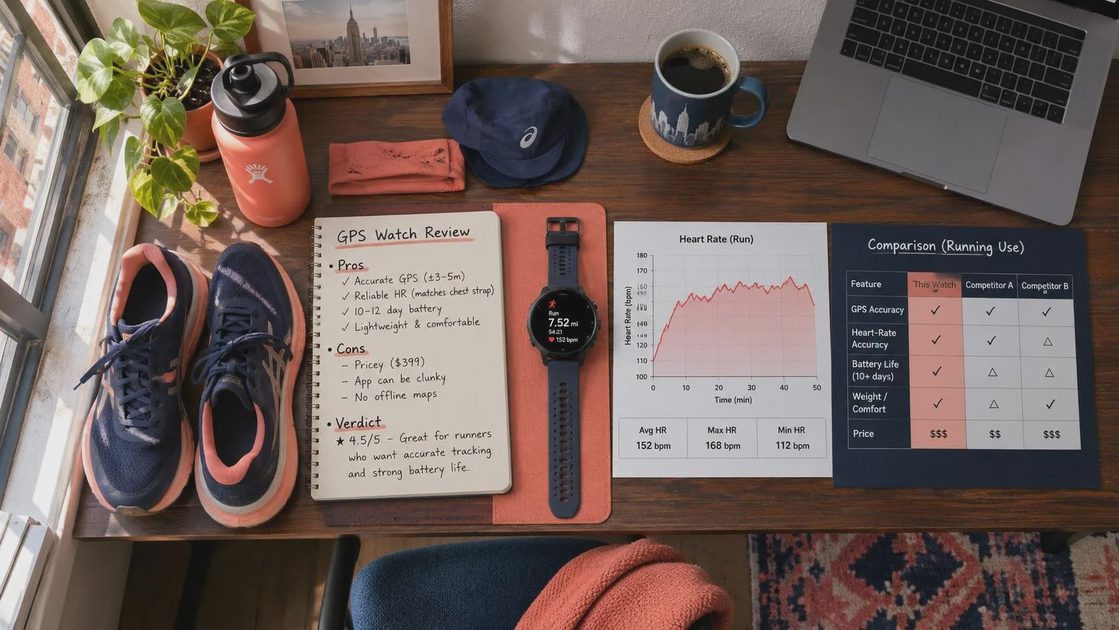
GPS performance was strong in open neighborhoods, park trails, and familiar roads. It settled quickly before most runs and produced distances close to my known routes. Tall buildings and dense tree cover still created occasional wiggles. That is normal for wrist-based GPS, not evidence that the watch is broken.
For steady running, pace and distance were useful enough to guide a workout. Instant pace jumped around on turns and under tree cover, so I relied more on lap pace or the average pace screen. This is one of the most important lessons from any Garmin watch review: the more frequently you stare at an unstable number, the less useful the workout becomes.
Optical wrist heart rate was reasonable during easy running and walking. It struggled more during fast intervals, especially when my hands were cold. A chest strap remains the better tool for short, intense efforts because it measures electrical signals from the heart rather than estimating each beat through wrist movement and blood flow.
That distinction is not academic. If your goal is a comfortable aerobic run, wrist heart rate can help you avoid starting too fast. If you are training by precise heart-rate zones, pair the watch with a compatible chest strap instead of treating every wrist reading as exact.
Sleep, recovery, and the danger of overreading data
Garmin’s sleep estimate was directionally useful. Bedtime, wake time, and obvious interruptions generally looked believable when compared with my own memory. The stages were less valuable. No consumer wrist device can directly observe brain activity in the way a sleep laboratory can, so deep sleep and REM estimates should be treated as educated interpretations.
The same applies to Body Battery, stress readings, and recovery suggestions. These tools can reveal a trend after several days, especially when training load, poor sleep, and a busy schedule line up. They cannot tell you that one low score means your body is in danger. Trust the trend, not the reading.
In practical terms, I paid attention when three signals moved together: I slept poorly, my resting heart rate ran higher than usual, and an easy pace felt unusually hard. On those mornings, reducing the workout made sense. When only one score looked odd, I usually ignored it and checked how I felt during the warm-up.
This is where a Garmin watch review should be more honest than a feature list. Health metrics are prompts for better questions, not diagnoses. Persistent symptoms such as chest pain, fainting, or unusual shortness of breath deserve medical attention, not another glance at a wrist graph.
Battery life and everyday comfort
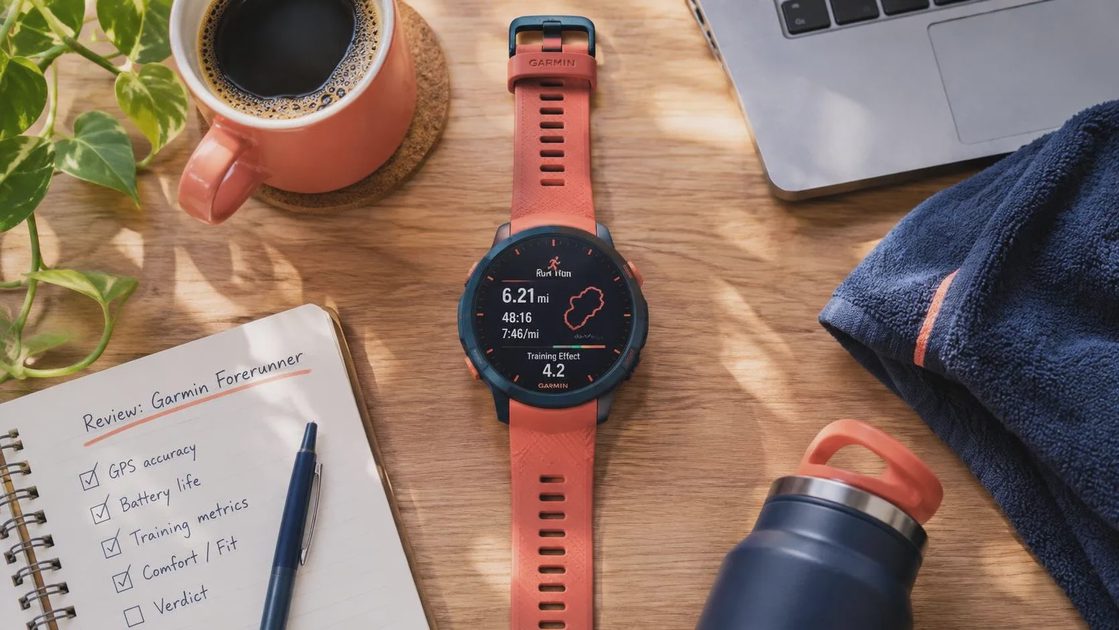
Battery performance was one of the watch’s strongest qualities. With several GPS workouts, overnight wear, notifications, and regular activity tracking, I could get multiple days before charging. A long run with GPS uses more power, and the brightest display setting shortens the interval, but the watch did not create the daily charging habit I associate with some smartwatches.
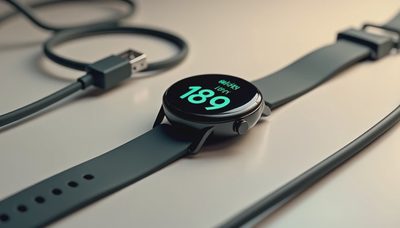
That matters for sleep tracking. If the watch needs a charger every night, sleep data becomes a collection of gaps. I charged it while showering or during desk work, usually before the battery became critically low. The charging cable is proprietary, so replacing it costs more than a standard USB cable and is worth remembering for travel.
Comfort was good enough for all-day wear and overnight tracking. The watch is not as discreet as a simple fitness band, but it also offers physical controls and a readable display during runs. Notifications were easy to limit through the Garmin app. I kept calls and texts off during workouts and allowed only calendar reminders.
Which Garmin model should you buy?
The Forerunner 165 is a sensible choice for a runner who wants GPS, structured workouts, sleep tracking, and a lower price. It gives up some advanced training and multisport features, but most new runners will not miss them. This Garmin watch review would be incomplete without saying plainly that buying less can be the smarter decision.
The Forerunner 265 makes more sense for someone who wants more training feedback, a sharper display, and enough flexibility for regular running, cycling, and strength work. It is the model I would point toward for a committed recreational runner who trains several days per week.
The Forerunner 965 adds maps, a larger display, longer battery life, and a more premium case. Those upgrades are useful for trail runners, ultra-distance athletes, and people who spend long days navigating unfamiliar routes. They are harder to justify if your typical workout is a thirty-minute neighborhood run.
The Venu line is a better fit for someone who prioritizes a lifestyle smartwatch appearance, wellness features, and general activity tracking over detailed run training. Garmin’s higher-end Fenix and Epix watches are powerful, but their size, weight, and price can be unnecessary for casual fitness.
Final verdict after weeks of wear
My Garmin watch review conclusion is positive, with one condition: buy the features you will use, not the features that look impressive in a comparison chart. Garmin’s strengths are dependable GPS, excellent battery life, physical workout controls, and a training ecosystem that rewards consistency. Its menus can feel dense, and its health scores invite overinterpretation if you forget what they can and cannot measure.
For a runner who wants structured guidance without a daily charging chore, the Forerunner 165 or 265 is the sensible starting point. Choose the 965, Fenix, or Epix only when maps, long battery life, or advanced multisport tools solve a real problem in your routine. A Garmin watch review should end with action, so here is mine: pick the smallest model that covers your training, wear it consistently for several weeks, and judge trends rather than isolated readings.

No letters yet — pray write the first.