The Two-Watch Rule
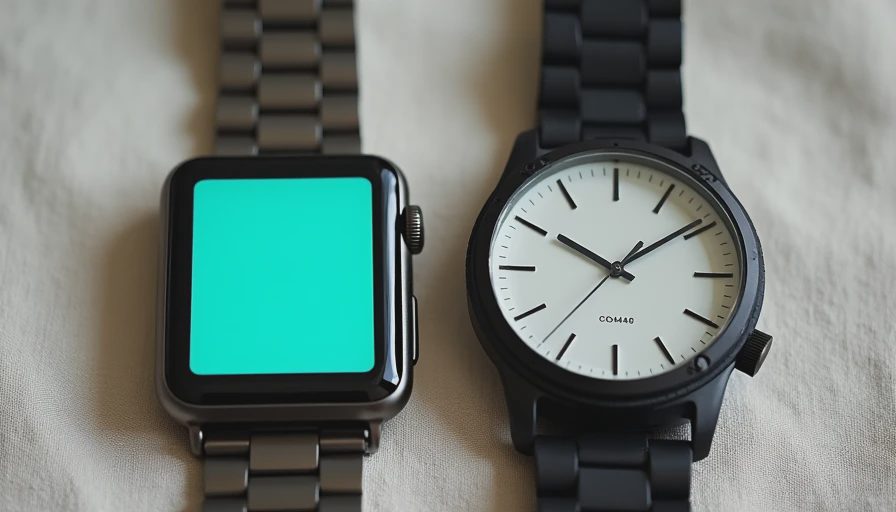
Every morning I strap on two watches. One costs four hundred dollars and talks to satellites, measures heart-rate variability, estimates my VO2 max, and occasionally suggests I take a breath because my stress score looks “elevated.” The other cost twenty bucks at a drugstore, has a scratched acrylic crystal, and tells time the old-fashioned way: hands that move.
People notice. At the trailhead, at the coffee shop, even at the cardiac rehab clinic where I used to work, someone always asks the same question: “Why bother with the Casio when you’ve got all that tech on the other wrist?”
The short answer is control. The longer answer is the reason this site exists.
I spent eleven years watching patients spiral over numbers that didn’t mean what they thought they meant. A single elevated resting heart rate at 2 a.m. could ruin a week of sleep. A “poor” recovery score after a normal hard day could convince someone they were broken. The devices were often right about the data and completely wrong about the interpretation. So when I left the clinic and started coaching everyday runners in Eugene, I made myself a rule: never trust a wearable without a dumb watch sitting right next to it.
The Casio is the control. It doesn’t care how I slept. It doesn’t grade my recovery. It just keeps ticking. And that quiet reliability is the most useful thing on either wrist.
What the Expensive Watch Actually Measures
Let’s be clear about what a modern smartwatch does well. Optical heart-rate sensors have gotten impressively consistent for steady-state running. GPS tracking is accurate enough for most training purposes. Sleep-stage estimates are directionally useful if you look at trends over weeks instead of single nights. Battery life on the better models has finally reached the point where you don’t have to plan your life around the charger.
I’ve worn more than thirty different devices over the last eight years. Some last three days. Some last fourteen. A few still work fine after ninety days of swimming, trail dust, and one very determined toddler who decided the watch was a chew toy. The good ones deliver real data: resting heart rate that drifts with training load, HRV that softens after a big week, step counts that roughly match reality.
But every single one of them also delivers noise. A wrist that got cold overnight can tank the overnight HRV reading. A loose band during a hard interval session can invent phantom spikes. An algorithm trained on twenty-something athletes can misread the recovery needs of a forty-something coach who also happens to be raising two kids and restoring a 1980s steel-frame bike in the garage.
The expensive watch is a very sophisticated instrument. It is not a crystal ball. Treating it like one is how people end up checking their wrist at 3 a.m. and deciding their life is falling apart because a number moved three points.
What the Casio Quietly Proves
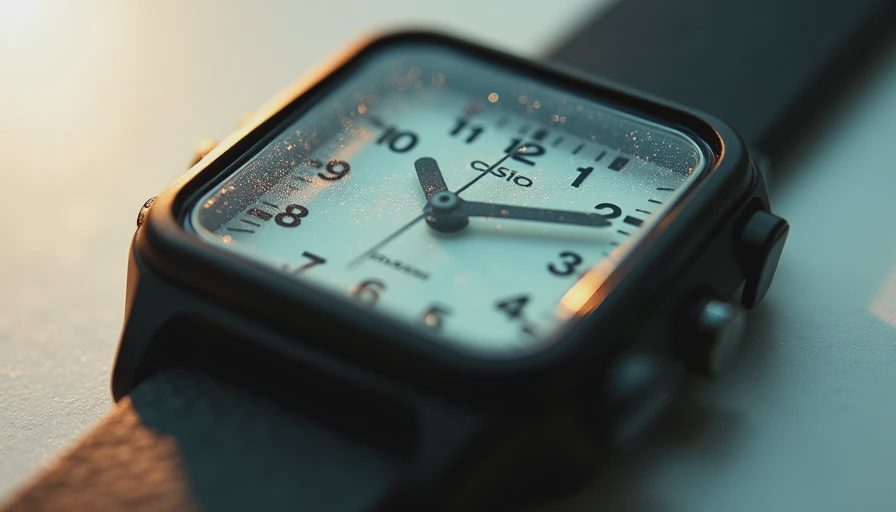
The Casio does almost nothing. It shows the time. The second hand sweeps. The day and date advance. That is the entire feature set.
Yet it teaches three things the smartwatch cannot.
First, consistency. The Casio does not need a firmware update. It does not suddenly decide that “sleep quality” is now calculated differently. It does not lose GPS lock under tree cover and invent a phantom 400-meter detour. It just keeps time the way it did the day I bought it.
Second, perspective. When both watches are on the same wrist, I can glance down and see the difference between a precise digital reading and a simple analog one. The smartwatch might claim my average pace was 7:42. The Casio just shows that I’ve been out for an hour and twelve minutes. Both are true. Only one of them invites overthinking.
Third, permission to ignore. There are days when the recovery score is “red,” the HRV is low, and the watch thinks I should take it easy. Sometimes the Casio and my own legs agree. Sometimes they don’t. On those days the cheap watch becomes a permission slip: go for the run anyway, pay attention to how you actually feel, and check the trend later instead of the single reading right now.
I once had a patient—call him Mark—who started checking his watch every time he woke up at night. By the third week he was averaging four hours of sleep because every small fluctuation in overnight heart rate convinced him something was wrong. We took the smartwatch off him for ten days and left him with a basic analog. His sleep normalized within a week. The data hadn’t been lying. The interpretation had.
Lessons from Eleven Years of Cardiac Rehab
In the clinic we saw the same pattern over and over. People arrived already terrified of their own numbers. A resting heart rate of 68 instead of their usual 62 could trigger a cascade of worry that raised the actual rate further. An irregular reading on a consumer ECG app could send someone to the ER for what turned out to be a benign premature beat.
The devices were rarely the villain. The missing context was. Heart rate is a trend. HRV is a trend. Sleep efficiency is a trend. A single night, a single run, a single afternoon reading is almost never the story. The story is the shape of the line over weeks.
That is why the Casio stays on. It is a physical reminder that most of what matters in training and recovery happens slowly. You do not need a new number every hour. You need to know whether the average is drifting up or down across a training block. You need to notice when your resting heart rate is consistently five beats higher than it was a month ago—not when it is three beats higher this morning.
I still coach that way. When a runner sends me a screenshot of a “poor” recovery score the day after a long run, I ask for the last three weeks of data instead. Almost always the trend is fine. The single day is just recovery doing its job.
The Practical Setup I Actually Use
Right now the left wrist wears whatever long-term test device is in rotation. The right wrist wears the Casio. I charge the smartwatch when it needs it and otherwise leave it alone. I do not wear the expensive watch to bed every night if the battery is already low; I would rather keep the streak of continuous data than create artificial gaps by forcing a charge cycle.
I look at the smartwatch data once a day, usually in the morning while coffee is brewing. I look for trends, not grades. If resting heart rate has been climbing for ten days while training load is steady, I pay attention. If one night looks ugly but the surrounding week is normal, I shrug and move on.
The Casio never gets consulted for data. It gets consulted for time, and for the quiet reminder that I already know how to tell whether I’m recovered: how the first easy miles feel, whether my legs have pop, whether I want to go longer or shorter. Those signals existed long before optical sensors.
Why This Matters for You
You do not need two watches. You especially do not need to copy my exact setup. What you do need is some version of a control—something that keeps you from treating every fluctuation as a crisis.
That control might be a cheap analog. It might be a simple decision to check data only once a day. It might be a rule that any single reading below a certain threshold gets ignored unless the trend agrees. It might just be the habit of asking, before you spiral, “Is this a trend or a blip?”
The wearables are getting better every year. Battery life is longer. Sensors are cleaner. Algorithms are less naive. None of that changes the fundamental truth: the device is a tool for noticing patterns over time. It is not a daily report card on your worth as an athlete or a human.
I still buy the expensive ones. I still test them for months. I still care about accuracy and durability and whether the battery actually lasts through a weekend of racing and travel. But I will keep the twenty-dollar Casio right next to them, ticking away, indifferent to scores and stages and stress levels.
Because the most useful thing a wearable can teach you is when to stop looking at it.
Trust the trend, not the reading. The Casio already does.

No letters yet — pray write the first.