Base training heart rate is one of the most useful numbers for runners who want to build endurance without turning every workout into a test. It is also one of the easiest numbers to misuse. Your watch can display a precise-looking figure while your sleep, heat, caffeine, stress, and wrist fit are quietly changing the result. After years in cardiac rehab and coaching everyday runners, I use heart rate as a guardrail, not a grade. Trust the trend, not the reading.
What base training is really trying to accomplish
Base training develops the aerobic system that lets you run longer while using oxygen efficiently. Most of the work feels controlled rather than dramatic. You should be able to speak in complete sentences, finish a run with something left, and recover well enough to train again soon.
The right base training heart rate is therefore not a magic number shared by everyone. It is an intensity range that keeps the effort mostly easy. For many runners, that range falls in the upper part of Zone 2, though zone definitions differ between Garmin, Apple, Coros, Polar, and other platforms. One device might calculate zones from maximum heart rate, while another uses heart-rate reserve or a threshold estimate. The labels are not interchangeable.
A practical starting point is roughly 65% to 75% of estimated maximum heart rate for genuinely easy running. That is only a starting point, not a medical prescription. A 45-year-old runner using a simple 175 beats-per-minute estimate might see an initial easy range around 114 to 131 beats per minute. Their actual training range could be higher or lower because maximum heart rate varies substantially between people.
The talk test often improves on formula-driven precision. If you can discuss your weekend plans but cannot comfortably answer a question, slow down. Walking briefly on a hill is not failure; it is often the most honest way to keep the workout aerobic.
How to find your useful heart-rate range
Start by collecting several ordinary runs rather than chasing a single laboratory-quality result. Choose flat or gently rolling routes and record pace, heart rate, weather, duration, and how the run felt. After three or four weeks, patterns become more useful than any individual workout.
For a first estimate, subtract your age from 220 to get maximum heart rate, then multiply that result by about 0.65 and 0.75. This familiar formula is easy but imperfect. A better estimate can come from a recent race, a supervised test, or a well-executed field assessment, provided you are healthy and accustomed to hard exercise. Do not perform an all-out test simply to satisfy a watch setting.
Resting heart rate can add context. If your normal morning reading is 58 and it suddenly sits at 66 for several days, an easy run may feel harder than usual. That change can follow poor sleep, illness, alcohol, accumulated training, or life stress. It does not automatically mean something is wrong, but it is a reason to reduce intensity and pay attention.
Base training heart rate should also be adjusted for conditions. On a warm afternoon, your heart rate can drift upward even when pace stays steady. Hills, dehydration, and strong wind create the same problem. Rather than forcing your usual pace, accept a slower mile and keep the effort relaxed.
What your smartwatch gets right and wrong
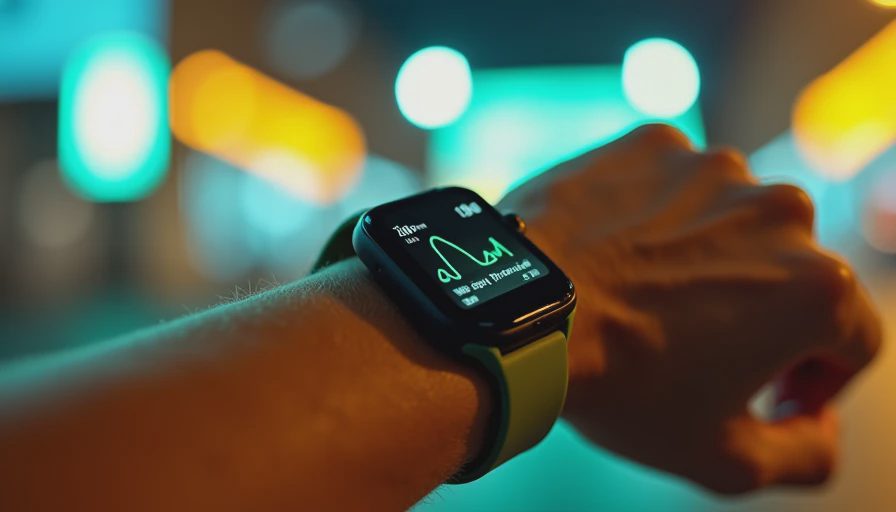
Optical wrist sensors are convenient, but they are not equally reliable during every activity. They tend to perform best during steady running when the watch is snug and positioned slightly above the wrist bone. Cold skin, loose straps, arm movement, tattoos, sweat, and cadence lock can all produce strange readings.
A chest strap usually responds faster during intervals and hills. For easy base work, however, a wrist sensor that gives a stable trend is often adequate. I have compared watches with a chest strap across long runs, and the most important question was rarely whether every beat matched. It was whether the device correctly showed an easy run becoming harder in heat or fatigue.
Do not react to one sudden spike by stopping in panic. First check the fit, look at the graph, and compare the number with your breathing and perceived effort. If the watch says 175 but you can comfortably chat while running downhill, the device may be wrong. If the number remains unusually high and you feel unwell, stop and seek appropriate medical advice. A wearable is not a diagnostic device.
How to use base training heart rate on real runs
Begin the first ten minutes below your intended ceiling. Heart rate rises gradually as your body warms, so starting too fast can push the entire run out of its intended range. On a normal easy day, let pace settle naturally after your breathing becomes smooth.
Use a ceiling more often than a target. A target encourages people to speed up when their heart rate is low, even if the day calls for gentle running. A ceiling lets the body choose the appropriate pace. If you planned a 45-minute run with a base training heart rate cap of 140, slow down whenever the number stays above that level for several minutes. Do not sprint after the run to make up for lost pace.
Heart-rate drift is another useful clue. Suppose you run 60 minutes on a calm day at roughly the same pace. If your heart rate climbs from 132 to 145 while effort feels increasingly difficult, you may have started too fast, need more fluids, or lack aerobic conditioning. If the same run produces less drift after six weeks, that is meaningful progress even if your average pace has barely changed.

Common mistakes that make the number less useful
The first mistake is treating a zone displayed by a watch as universal truth. Open the device settings and confirm whether zones use maximum heart rate, resting heart rate, or lactate threshold. A poorly chosen maximum can make easy runs look too hard or hard workouts look deceptively easy.
The second mistake is comparing your number with another runner. Two people running 10-minute miles can have very different heart rates because of age, fitness, medication, genetics, temperature, and sensor accuracy. Your own repeated data matters more than a stranger's screenshot from a running forum.
The third mistake is squeezing every run into a narrow band. Real training includes warmups, hills, stops, and gradual drift. A few minutes above your ceiling will not erase your aerobic work. The goal is to control overall stress, not produce a perfectly flat graph.
Finally, do not ignore symptoms because a watch reports a normal value. Chest pressure, fainting, unusual shortness of breath, or palpitations deserve medical attention regardless of what the screen says.
A simple four-week approach
For week one, take three easy runs and write down pace, average heart rate, weather, and a one-to-ten effort rating. In week two, repeat similar routes and focus on staying conversational. In week three, add a slightly longer run while keeping the intensity controlled. In week four, compare the records rather than celebrating the fastest individual mile.
Base training heart rate becomes useful when it helps you make a decision: slow down in heat, take an easier day when recovery is poor, or recognize that the same pace now feels easier. If the number changes your behavior in a sensible way, it is earning space on your wrist. If it only makes you anxious, hide the live display and review the trend later. The best metric is the one that helps you train consistently, recover well, and enjoy the next run.




No letters yet — pray write the first.