If you are searching for heart rate monitor and running advice, you probably want a practical answer: should you trust the number on your wrist, and what should you do with it? After years in cardiac rehab and coaching everyday runners, I have learned that heart rate is useful when it answers a training question. It becomes noise when you stare at every spike.
A heart rate monitor cannot tell you whether a run felt meaningful. It can show how hard your cardiovascular system is working, help you control an easy day, and reveal patterns over several weeks. The key is to use it as feedback rather than a referee.
Why heart rate matters during a run
Your heart rate is the number of times your heart beats in a minute. As running intensity rises, your muscles need more oxygen, and your heart generally beats faster to deliver it. That makes heart rate a helpful internal measure of effort, especially when pace is distorted by hills, heat, wind, poor sleep, or a stressful day.
Pace is an external measure. It tells you how quickly you are moving. Heart rate is an internal measure. It tells you how demanding that pace is for your body today. A 10-minute mile at 140 beats per minute might feel relaxed on a cool morning, but the same pace could require 155 beats after a hot night with little sleep.
This is where heart rate monitor and running data work well together. If your pace slows while heart rate climbs, heat, dehydration, fatigue, or an unusually difficult route could be involved. That is more useful than deciding you suddenly became unfit because your watch recorded a slower mile.
The most important habit is simple: trust the trend, not the reading. One strange number deserves curiosity, not panic.
Wrist sensors versus chest straps
Most modern watches use optical sensors. Green light shines into the skin, and the device estimates blood flow changes beneath the wrist. This is comfortable and convenient, but motion can interfere with the signal. Loose bands, cold skin, downhill arm movement, and intervals can all produce delayed or jumpy readings.
A chest strap measures the electrical activity associated with each heartbeat. It usually responds faster during sprints, hill repeats, and rapid changes of pace. For steady running, a good wrist device can be perfectly serviceable. For structured interval work, a chest strap is still the cleaner tool.
Fit matters more than many buyers expect. Wear the watch slightly above the wrist bone, snug enough that it does not slide, but not so tight that it becomes uncomfortable. Warm up before judging accuracy. I have seen a cold-weather reading sit suspiciously low for the first mile and settle once circulation improved.
Apple Watch, Garmin, COROS, and Polar all offer useful training ecosystems, but the most expensive model is not automatically the most accurate for your arm, skin, or running style. Test your own device against how you feel and, when precision matters, compare it with a chest strap.

Understanding heart rate zones without overcomplicating them
Heart rate zones are ranges intended to describe different effort levels. The exact boundaries depend on the method used. A formula based on age is a rough starting point, not a personal laboratory measurement. Maximum heart rate varies substantially between people of the same age.
For everyday runners, three broad descriptions are often more useful than arguing about whether a watch calls something Zone 2 or Zone 3. Easy effort means you can speak in complete sentences. Moderate effort means conversation becomes shorter. Hard effort means you can sustain only brief phrases and are deliberately working.
If your watch displays a zone based on an inaccurate maximum heart rate, every zone can be shifted. A runner whose true maximum is higher than the default setting may be told that normal aerobic running is dangerously intense. Another runner may be shown an easy zone that is too demanding. Update your maximum heart rate only when you have a sensible reason, and do not treat a single hard workout as definitive proof.
For an easy run, breathing and conversation are valuable cross-checks. Heart rate monitor and running zones should support those observations, not overrule them automatically.
How I use the data in real training
On easy days, I use heart rate to prevent enthusiasm from turning recovery into a workout. A familiar route can feel effortless at the start, especially when I am coaching or chatting with someone. If the number rises steadily while the pace stays the same, I ease off, shorten the stride, or walk briefly on a climb.
For tempo running, I care more about a controlled range than a perfect number. The goal is sustained work that feels strong but repeatable. If the first mile is already near the top of the planned effort, I slow down before the session becomes an accidental race.
For intervals, I pay attention to recovery rather than expecting heart rate to match the work interval instantly. Your heart rate continues rising for a short time after you stop or slow. Chasing a precise peak can encourage poor pacing. Run the interval by effort and pace, then use the heart-rate response as information afterward.
Heart rate monitor and running records are particularly helpful across weeks. A familiar route completed at the same pace with a lower average heart rate can suggest improved aerobic efficiency. The opposite pattern can signal fatigue, heat, illness, or accumulated stress. It is a clue, not a diagnosis.
What can make a reading look wrong
Heat is one of the biggest influences. As your body sends more blood toward the skin for cooling, heart rate can drift upward even if pace remains unchanged. Humidity, hills, dehydration, caffeine, anxiety, and poor sleep can create similar effects. A high reading after a difficult workday is not automatically evidence of a heart problem.
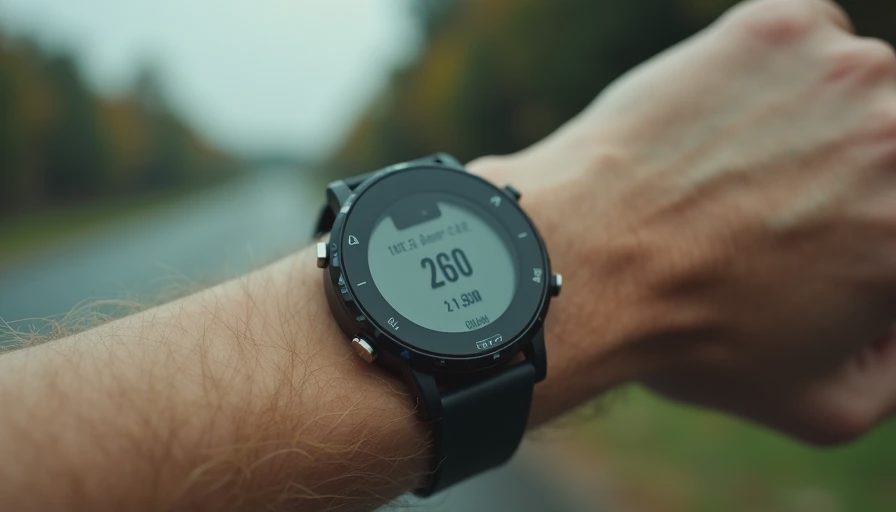
Cadence lock is another common wrist-sensor error. The watch may mistake arm movement for heartbeats and display a number close to your step rate. This often appears as an implausibly steady reading during faster running. Tightening the band, moving the watch higher, or using a chest strap can help.
Look at symptoms alongside the screen. Stop exercising and seek prompt medical advice for concerning symptoms such as chest pressure, fainting, severe unusual shortness of breath, or palpitations that do not settle. A wearable is not a medical monitor, and normal-looking data should not dismiss serious symptoms.
A practical buying and training checklist
Before buying a device, decide what problem you want it to solve. If you mainly need pace, elapsed time, and occasional effort guidance, a basic Garmin Forerunner, Apple Watch, or COROS model may be enough. If you train by intervals or want reliable live response, budget for a compatible chest strap rather than spending every dollar on a flagship watch.
During the first two weeks, wear the device consistently and record context: temperature, route, sleep, caffeine, and how the run felt. Do not change your training because of one unusual reading. Compare similar routes and similar efforts. Review average heart rate, pace, and perceived effort together.
A useful routine looks like this:
- Start easy for the first 10 minutes while your sensor settles.
- Check whether breathing and heart rate tell a similar story.
- Ignore isolated spikes unless they repeat or come with symptoms.
- Review the workout after cooling down instead of watching every second.
- Make training changes from patterns across several runs.
Heart rate monitor and running technology is at its best when it helps you run an appropriate effort today, not when it persuades you to chase a prettier graph. Buy the simplest reliable tool that answers your question, wear it consistently, and let your body remain part of the measurement. Trust the trend, not the reading.

No letters yet — pray write the first.