Training with heart rate monitor data is useful when it answers a simple question: how hard is my body actually working? The number on your wrist is not a grade, a diagnosis, or proof that one workout was better than another. It is a clue. Used with pace, breathing, terrain, sleep, and your own judgment, it can help you train consistently instead of racing every easy run.
I spent years watching people in cardiac rehab panic over a single reading, then spent the last eight years comparing watches, chest straps, and optical sensors while coaching runners. My rule remains the same: trust the trend, not the reading.
What Your Heart Rate Is Telling You
Heart rate is the number of times your heart beats per minute. As exercise intensity rises, your muscles need more oxygen and your heart generally beats faster to deliver it. That relationship makes heart rate useful for controlling effort, especially when hills, heat, wind, or fatigue make pace misleading.
For example, a 10-minute mile might feel easy on a cool morning and surprisingly hard on a humid afternoon. Training with heart rate monitor feedback can reveal that difference. If your heart rate is unusually high at a familiar pace, you might need more water, more recovery, or a slower start. If it stays controlled, you can continue without forcing the pace.
Heart rate zones are usually described from Zone 1, very easy, through Zone 5, near-maximal effort. The exact boundaries depend on your maximum heart rate, resting heart rate, or laboratory testing. A watch estimate is a starting point, not a physiological fact carved in stone.
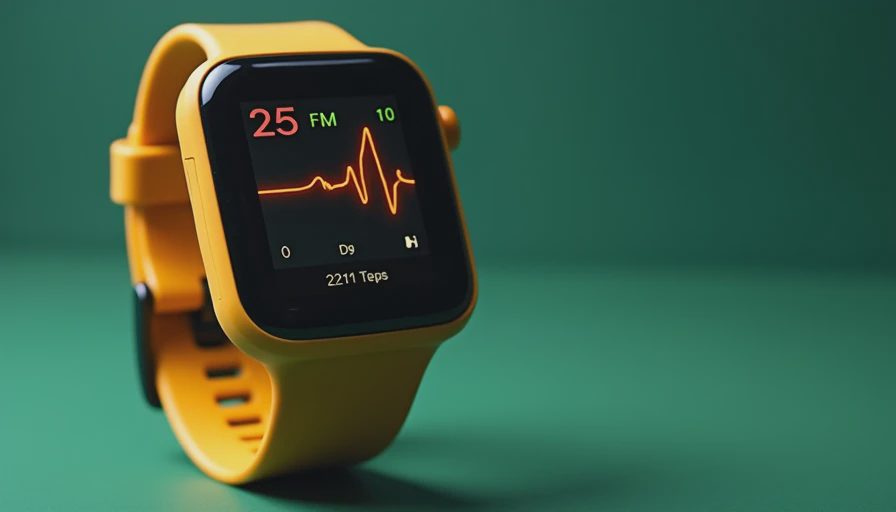
How to Use Heart Rate Zones Without Overthinking Them
For most recreational runners, Zone 2 is the practical workhorse. It should feel conversational, with relaxed breathing and enough control to speak in complete sentences. This effort supports aerobic fitness while placing less stress on your body than repeated hard sessions.
Zone 3 feels steady and purposeful. You can talk, but conversations become shorter. Zone 4 is hard, often used for tempo intervals or sustained climbs. Zone 5 is reserved for brief, demanding efforts. You do not need to spend much time in the highest zone to improve, and chasing a higher number is not automatically productive.
When training with heart rate monitor zones, begin with the talk test. If your watch calls an effort Zone 2 but you can barely speak, trust your breathing first. Devices can calculate zones from an inaccurate maximum heart rate, and that error affects every recommendation downstream.
A beginner might use two simple targets: keep easy runs comfortable and allow only one or two intentionally hard sessions each week. That approach is more useful than trying to hit an exact number every minute.
Wrist Sensors Versus Chest Straps
Optical wrist sensors are convenient, and modern watches from Garmin, Apple, COROS, Polar, and Fitbit can provide useful information during steady running. They are less dependable when you sprint, lift weights, cycle in a tucked position, or move your wrist repeatedly. A loose band, cold skin, tattoos, sweat, and rapid changes in effort can all create delays or odd spikes.
A chest strap measures electrical signals closer to the heart and usually responds faster. For interval workouts, heart-rate testing, or anyone frustrated by sudden readings, a Polar H10 or Garmin HRM-Pro Plus is often a better tool than a premium watch. You do not need the most expensive device. A basic watch paired with a reliable strap can beat a flagship watch used carelessly.
For training with heart rate monitor technology, fit matters. Wear a watch snugly, about a finger-width above the wrist bone. Before hard exercise, warm your skin and give the sensor time to lock on. With a strap, moisten the electrodes and position it firmly without making breathing uncomfortable.
Building a Week Around the Data
A heart rate monitor should shape your week, not dictate every step. Consider a busy runner with four available training days. One easy run can stay in a comfortable aerobic zone, one workout can include intervals, one longer run can remain controlled, and the final day can be optional recovery or rest.
Suppose the runner plans a 30-minute interval workout but sees an unusually high heart rate during the warmup. Instead of forcing the session, they might extend the warmup, shorten the intervals, or switch to an easy run. That is not weakness. It is useful decision-making. Poor sleep, illness, alcohol, stress, and accumulated training can all raise effort before the legs feel obviously tired.
Training with heart rate monitor feedback is especially helpful for long runs. The first few miles can feel easy while heart rate gradually climbs. If you keep the pace fixed despite rising effort, the final miles can become unnecessarily difficult. Slowing slightly early often produces a stronger, more controlled finish.

Accuracy Problems and Common Mistakes
The biggest mistake is treating a single high reading as a medical emergency or a single low reading as proof of exceptional fitness. Sensor errors happen. Stop, check the fit, compare the number with your breathing, and see whether the reading settles.
Another mistake is using an age-based maximum heart rate formula as if it were personal testing. Formulas can be several beats away from reality for an individual. That does not make them useless; it means your zones should be adjusted as you gather real workout evidence.
Do not compare your heart rate directly with a training partner's. Two healthy people can run the same pace with different heart rates because of genetics, fitness, medication, temperature, hydration, and measurement differences. The useful comparison is usually against your own past sessions under similar conditions.
If you repeatedly experience chest pressure, fainting, unusual shortness of breath, or palpitations during exercise, stop and seek medical guidance. A wearable cannot diagnose the cause, and a reassuring screen should not override concerning symptoms.
What to Review After Each Workout
After training with heart rate monitor data, spend two minutes reviewing the session. Look at average heart rate, peak heart rate, pace, elevation, and how the effort felt. For easy runs, ask whether the effort stayed conversational. For intervals, check how quickly your heart rate rose and whether recovery became slower across repetitions.
Keep notes about heat, sleep, caffeine, and soreness. A heart rate of 155 beats per minute means something different on a cool morning than during a summer hill workout. Over several weeks, you may notice that the same easy pace requires less effort, or that your heart rate remains elevated after a poor night of sleep. Those trends are valuable; a tiny difference between two similar sessions usually is not.
Training with heart rate monitor information works best as a feedback loop: plan an effort, observe the response, then adjust the next session. It should make your training calmer and more repeatable, not turn every run into a courtroom argument with your watch.
The Simple Approach I Recommend
Start by wearing the device consistently for two weeks without changing your entire training plan. Learn your normal resting readings, easy-run range, and response to hills. Then use the talk test to confirm whether the zones make sense. If the watch frequently jumps around, add a chest strap before buying a newer watch.
Use easy days to build consistency, hard days with a clear purpose, and rest days without guilt. Review weekly patterns rather than refreshing live data every few seconds. Training with heart rate monitor guidance is most valuable when it helps you finish today's workout ready for the next one.
The number on your wrist is information, not instruction. Let it support your judgment, pair it with how you feel, and keep the goal in view: stronger, healthier movement over time.



No letters yet — pray write the first.