Choosing a smart watch GPS running device sounds simple until you compare fifteen-minute feature lists that all promise better training. After wearing more than 30 watches over eight years, I have learned that the best option is rarely the one with the longest list. A good smart watch GPS running setup should record your route reliably, show useful information without distracting you, and survive the sweaty, boring miles that build fitness.
I look at these watches as a coach and former cardiac rehab exercise physiologist, not as a collector of expensive wrist computers. The question is not whether a device can estimate forty different metrics. The question is whether those numbers help you train consistently and recover sensibly.
What GPS accuracy looks like in real running
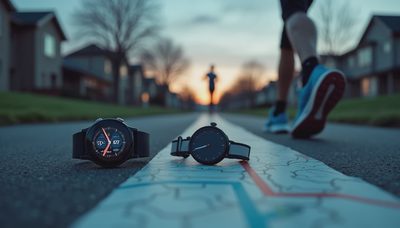
GPS accuracy matters most when you use pace, distance, or route data to make decisions during a run. In an open park or on a straight road, a modern Garmin Forerunner, Apple Watch, COROS Pace, or Polar Pacer will usually produce a useful track. Problems appear in downtown streets, dense tree cover, narrow trails, and routes with frequent turns.
A watch does not know your position continuously in the way a car navigation system seems to. It samples satellite signals, estimates movement, and smooths the result. Tall buildings can bounce the signal. Tree cover can block it. A sharp switchback can make the recorded line cut across the corner. That is why a one-mile split can be several seconds strange even when the full run looks reasonable.
For everyday road training, I care more about repeatability than a perfect map. If the watch gives me similar results on the same measured loop, I can coach from the trend. Dual-band GPS, available on models such as the Garmin Forerunner 265 and Apple Watch Ultra, can improve performance in difficult environments, but it is not essential for every runner. On rural roads around Eugene, my midrange watches often do just fine.

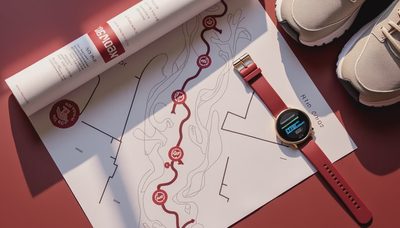
Before starting, wait for the GPS lock instead of pressing start while the watch is still searching. Wear it firmly above the wrist bone, especially if you have a small wrist or are running in cold weather. If the course is unfamiliar, download the route first. These small habits often improve the result more than buying a $900 model.
Heart rate: useful guidance, not a diagnosis
Wrist-based optical heart-rate sensors are helpful for easy runs, steady efforts, and general training patterns. They are less dependable during fast intervals, strength work, cold starts, and workouts with lots of arm movement. A loose strap can cause a delay, while sweat and skin temperature can affect the signal.
For runners who want precise interval control, a compatible chest strap remains the better tool. The Polar H10 and Garmin HRM-Pro Plus are common examples. A chest strap measures the electrical activity associated with each heartbeat, while a wrist sensor estimates blood flow changes under the skin. That difference matters when your effort changes quickly.
Do not panic over one unusually high or low reading. I once saw a watch report an easy trail run with an average heart rate that was clearly too high; the graph had visible gaps and spikes. My breathing, pace, and perceived effort all said otherwise. Trust the trend, not the reading. If you have symptoms such as chest pain, fainting, or unusual shortness of breath, stop exercising and seek appropriate medical care rather than asking a watch to interpret them.
Battery life and daily convenience
Battery life is a practical feature, not a bragging right. A runner who charges every night may be perfectly happy with an Apple Watch Series 9 or Pixel Watch. Someone training for a marathon and recording long weekend runs will appreciate the longer endurance of a Garmin Forerunner 255, COROS Pace 3, or similar dedicated model.
Consider how you actually live. If you want music, calls, maps, notifications, sleep tracking, and frequent GPS workouts, a smartwatch battery will drain faster. Always-on displays also use more power. A device that lasts ten days in a marketing test may last much less when GPS, music, and bright screen settings are active.
My preferred routine is simple: charge after a long run or while showering, not when the battery is already nearly empty. Before a race, confirm the battery percentage, GPS mode, and auto-pause settings. A watch that dies at mile 18 is not rescued by having an attractive recovery score.

Which features help runners improve?
A useful smart watch GPS running tool should answer three questions: How hard am I working, how far have I gone, and what should I do next? Structured workouts can help you complete intervals without memorizing every split. Pace alerts are useful on flat roads. Lap buttons help during track sessions. Training load can reveal that several hard days have accumulated, although the estimate is not a medical measurement.
Recovery scores deserve a calm interpretation. Sleep, resting heart rate, recent training, and stress estimates can provide context, but they do not know whether your child kept you awake or whether you are anxious about work. If the watch says you are ready but your legs feel heavy, reduce the workout. If the watch says you need rest and you feel normal, an easy run is usually a reasonable compromise.
I give little weight to calorie estimates. They are built from body information, heart rate, movement, and assumptions. Use them for broad comparison, not for deciding what you are allowed to eat. Pace, consistency, and how you feel at a given effort are more actionable for most runners.
Choosing by budget and running style
Around $200 to $300, you can find strong dedicated options such as the COROS Pace 3, Garmin Forerunner 165, or older Forerunner models on sale. These watches generally provide dependable GPS, workout support, and enough battery for regular training without unnecessary luxury features.
In the $300 to $500 range, you may gain better screens, maps, advanced training tools, music, or improved sensors. The Garmin Forerunner 265 is attractive for runners who want a bright AMOLED display and substantial workout guidance. The Apple Watch Series 9 or newer models make more sense for iPhone users who want a general smartwatch first and a running tool second.
Above $500, ask what problem you are solving. A Garmin Forerunner 965, Apple Watch Ultra, or COROS Vertix can be worthwhile for serious navigation, long events, outdoor adventures, or premium materials. It will not make an easy run easier or replace a sensible training plan. If you mostly run three to five miles on familiar roads, save the money for shoes, race entry, or coaching.
A simple buying checklist
Start with phone compatibility. Apple Watch models work best inside the Apple ecosystem, while Garmin, COROS, and Polar support both major phone platforms with different app experiences. Next, check battery life with GPS enabled, not only the headline estimate. Confirm whether maps, music, and turn-by-turn navigation require a phone or a paid service.
Then consider comfort. A watch can have excellent specifications and still annoy you at night or slide during intervals. Look for a strap you can replace, a screen you can read in sunlight, and physical buttons if you dislike tapping a sweaty display. Finally, decide whether you want a smart watch GPS running device or a smartwatch that happens to record runs. That distinction prevents overbuying.
The best choice is the one you will wear on an ordinary Tuesday, not only on race morning. Compare current prices from reputable retailers, look at return policies, and spend a week learning the basic screens before adding advanced metrics. A dependable midrange watch, used consistently, beats a flagship left in a drawer. For most runners, that is the real measure of smart watch GPS running value.


No letters yet — pray write the first.