Finding the best fitness tracker under 100 is less about collecting every possible metric and more about getting dependable feedback you will actually use. After wearing budget trackers for weeks rather than judging them from a quick unboxing, I look for comfortable hardware, sensible software, useful sleep information, and workout data that does not pretend to be medical equipment. A tracker should help you walk more, train consistently, or notice a sleep pattern. It should not turn every imperfect night into a crisis.
The good news is that you do not need a $400 smartwatch for those jobs. Fitbit, Amazfit, Xiaomi, and even entry-level Garmin models can cover the basics for roughly $50 to $100 when prices are favorable. The trade-offs usually involve built-in GPS, app polish, notification features, and the quality of heart-rate readings during intervals.
What matters most in a budget tracker
Start with fit and battery life. A tracker that lasts seven to fourteen days is easier to wear overnight than one that needs charging every evening. The band should sit firmly above the wrist bone without leaving a deep mark. If it slides around during a run, heart-rate readings become less useful, and sleep tracking can be interrupted by accidental removal.
Step counting is generally the strongest budget feature. It will not be perfect, especially when you push a shopping cart or move your hands without walking, but it can reveal a meaningful weekly pattern. I care less about whether a device says 8,241 or 8,516 steps than whether your average moves from 5,000 to 7,000 over a month.
Heart rate is useful for broad trends. During an easy walk, a decent optical sensor should give a reasonable picture. Fast intervals, cold skin, loose bands, and strength training are harder. Calories burned deserve even less attention. The number is an estimate built from assumptions about your body and movement, not a permission slip to eat or a score to feel guilty about.
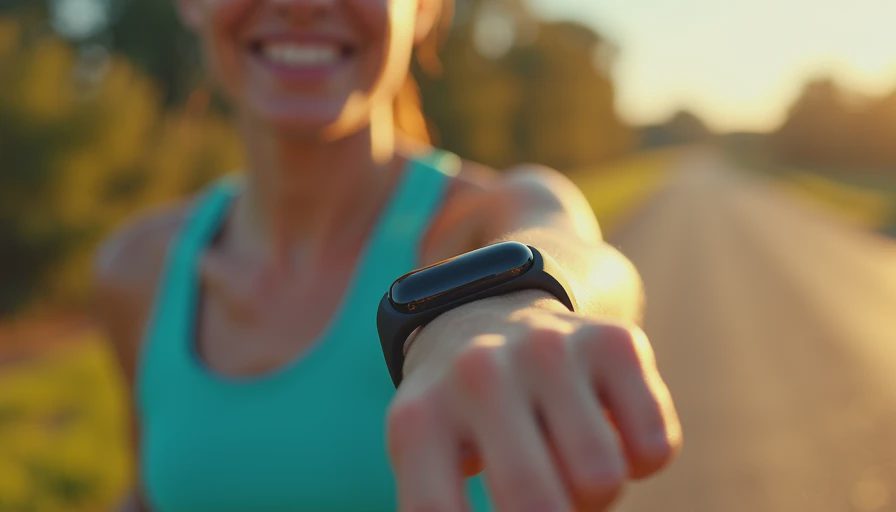
The best fitness tracker under 100 for everyday health
For most people, the Fitbit Inspire 3 is one of the safest all-around choices in this price range. It is slim, comfortable in bed, and simple enough for someone who does not want a miniature phone on the wrist. Step counts, resting heart-rate trends, basic sleep stages, and automatic activity recognition are presented in a friendly app. Its battery commonly lasts several days, though always-on display settings and frequent workouts reduce that figure.
Fitbit’s main advantage is clarity. The app makes it easy to see whether you have been moving less this week or whether your sleep schedule is drifting. Some deeper insights require Fitbit Premium, so include that possible subscription in your long-term budget. If you only want daily activity, basic sleep duration, and gentle reminders, the free experience can still be useful.
Amazfit’s Band 7 or a discounted Bip model is another strong value. Amazfit typically offers a larger display, long battery life, and a wide menu of workout modes. The software is not as polished as Fitbit’s, but runners may appreciate built-in GPS on certain watches rather than carrying a phone. Check the exact model because features vary considerably between a slim band and a budget smartwatch.
The best fitness tracker under 100 for runners
Runners should begin with GPS, not a colorful screen. If the tracker records distance and pace from satellites, you can leave your phone behind for an easy run. The Garmin Forerunner 55 often sells above this budget, but sales can bring it close to $100. When that happens, it is worth considering because Garmin’s training screens, buttons, and running ecosystem are more purposeful than many lifestyle bands.
If the Forerunner 55 remains too expensive, an Amazfit model with GPS can provide the basic route, pace, and distance data. Expect more compromises in workout planning and app refinement. For a beginner running three short sessions each week, that may be entirely acceptable. You do not need advanced recovery scores to complete a 30-minute easy run.
The best fitness tracker under 100 for a runner should also export or sync workouts reliably. A device that loses a run every few weeks becomes frustrating quickly. Before buying, confirm that the tracker works with your phone and preferred platform. Android and iPhone compatibility is not always identical, particularly for replying to notifications or using voice features.
Sleep tracking without the panic
Sleep data can be helpful when you treat it as a pattern rather than a verdict. Most consumer trackers estimate sleep from movement and heart-rate changes. They are better at identifying when you were probably asleep or awake than determining exact sleep stages. A reading that says you had 42 minutes of deep sleep is not a clinical measurement.
The best fitness tracker under 100 for sleep should be light enough that you forget it is there. Fitbit Inspire 3 is particularly comfortable for this reason, while some larger budget watches feel bulky against a pillow. Look at total sleep time, bedtime consistency, and how you feel in the morning. If the device reports a poor night but you feel rested, do not automatically change your routine because of one number.
A more useful experiment is to compare two weeks. Keep caffeine timing and bedtime roughly similar, then see whether your average sleep duration changes. Trust the trend, not the reading. If you have persistent insomnia, loud snoring, breathing pauses, or unusual daytime fatigue, a tracker is not a substitute for medical evaluation.
Features worth paying for, and features to skip
Built-in GPS is worth paying for if you regularly walk, hike, or run without your phone. It is less important if your phone is always in a pocket and you mainly want steps. Water resistance is practical for showers, rain, and pool sessions, but confirm the manufacturer’s limits before using a device for deep water. Most inexpensive trackers do not replace a dedicated swim watch.
A bright screen helps outdoors, while physical buttons are easier to use with sweaty hands. Contactless payments, music storage, and detailed maps are uncommon below $100. Do not select a tracker because it lists dozens of workout modes; many simply change the label while recording the same basic motion and heart-rate data.
Also consider replacement bands. A $70 tracker can become a poor value if proprietary bands cost $25 and the original strap breaks quickly. Fitbit and Garmin accessories are easy to find, while lesser-known brands can be more dependent on online marketplaces. That small detail matters when you plan to wear the device for two or three years.
How to choose your match
If your goal is walking, sleep, and simple reminders, choose Fitbit Inspire 3 when its price fits your budget. If long battery life and a larger screen matter most, compare Amazfit bands and watches. If running is the priority, look for a GPS-equipped Amazfit model or a sale on the Garmin Forerunner 55. If you only want heart-rate checks during gym sessions, nearly any reputable band from Fitbit, Garmin, or Amazfit can cover the basics.
Before checkout, confirm four details: phone compatibility, battery expectations, GPS requirements, and whether important insights require a subscription. Read recent owner feedback for charging problems and strap durability rather than focusing only on star ratings. Retail prices move constantly, so a model listed at $119 one week may become the obvious bargain the next.
The best fitness tracker under 100 is the one you can wear comfortably, understand without a tutorial, and use to make one practical change. Walk after lunch, keep a steadier bedtime, or slow an easy run when the data supports it. That is enough. The wrist computer is only useful when it improves the behavior on the other end of the wrist.


No letters yet — pray write the first.