A high resting heart rate can look alarming when it appears on your Apple Watch, Garmin, Fitbit, or Oura app. I have watched runners stare at a single elevated number as if it were a diagnosis. It is not. Resting heart rate is useful, but only when you understand how it was measured, what your normal range looks like, and what else is happening in your body.
I spent eleven years in cardiac rehabilitation and have worn more than 30 wearables over the past eight years. My practical rule is simple: trust the trend, not the reading. A persistent change deserves attention. One strange morning usually deserves better measurement first.
What resting heart rate actually measures
Resting heart rate is the number of times your heart beats per minute while your body is relatively calm. Your heart still responds to breathing, temperature, hydration, emotions, medications, sleep, and recent exercise. That means it is not a fixed personal score, and there is no single perfect number for every adult.
Many healthy adults land somewhere around 60 to 100 beats per minute when awake and resting, although endurance-trained people can sit below that range without a problem. A sleeping heart rate may be lower than a daytime reading. A runner who normally sees 48 beats per minute overnight might reasonably pay attention to several nights around 60, while a nonathlete who usually sees 78 may not have the same concern at 88.
The useful question is not simply, “Is my number high?” Ask, “Is it higher than my established baseline, and do I feel different?” A high resting heart rate after a hard workout, a late night, or a stressful meeting has a different meaning from a sustained elevation accompanied by symptoms.
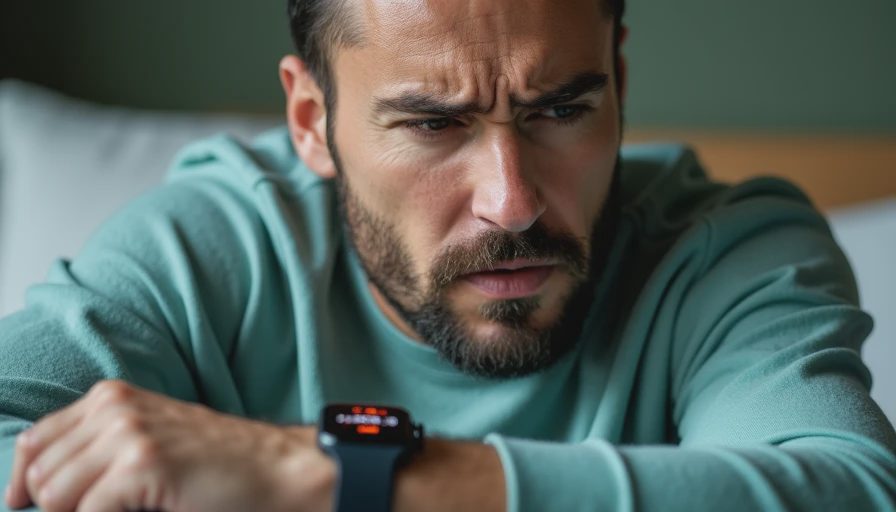
Why your wearable might show a high resting heart rate
The most common causes are ordinary: poor sleep, dehydration, alcohol, fever, emotional stress, heat, and accumulated training fatigue. Your body increases circulation demand when it is fighting an infection or trying to recover. Caffeine, nicotine, stimulant medications, and some decongestants can also raise the number.
A hard interval session on Tuesday can affect Wednesday morning’s data, especially if you trained harder than usual or under-fueled. Travel and a warm bedroom can do the same. Menstrual-cycle changes, pain, and anxiety are additional factors that a wrist device cannot interpret on its own.
Sensor quality matters too. Optical heart-rate sensors estimate pulse by shining light into the skin and detecting blood-volume changes. A loose band, cold hands, tattoos, heavy movement, or poor skin contact can create an inaccurate result. A watch worn over a sleeve is not measuring you. Neither is a ring that moved during the night.
Before reacting to a high resting heart rate, inspect the context in your app. Did the device capture a full night? Was the reading taken during sleep, on waking, or after walking around? Is your heart rate elevated across several measurements, or did one short sample jump?
How to check whether the trend is real
Start with a repeatable routine for five to seven days. Wear the device snugly, about a finger-width above the wrist bone. Record your sleep, training, alcohol, illness symptoms, and unusual stress. Take a manual pulse in the morning before coffee if you want a second reference: sit quietly for five minutes, count beats for 30 seconds, and multiply by two.
Do not compare your number directly with a friend’s. Compare it with your own recent baseline. A change of a few beats is often normal device and biological variation. A rise of roughly 10 or more beats that persists for several days is more useful information, particularly if your sleep and routine have not changed.
For runners, heart-rate drift can reveal poor recovery before performance clearly drops. If an easy pace feels unusually difficult and your morning readings are elevated, replace the planned hard session with walking or easy movement. This is not weakness; it is a sensible training adjustment.
When a high resting heart rate needs medical attention
A high resting heart rate should be discussed with a healthcare professional when it remains elevated without an obvious short-term explanation, keeps recurring, or appears alongside reduced exercise tolerance. Bring the actual trend, not just a screenshot. Include medications, recent illness, caffeine intake, sleep changes, and your usual baseline.
Seek urgent medical care for a fast or irregular heartbeat with chest pain, fainting, severe shortness of breath, confusion, or marked dizziness. Those symptoms matter more than what a watch says. If the device reports an abnormal rhythm, treat it as a prompt to confirm the finding with clinical equipment rather than as a final diagnosis.
Do not stop prescribed medication because a wearable number changed. Beta blockers, thyroid medications, inhalers, decongestants, and other drugs can influence pulse, but medication decisions belong with the prescribing clinician.
What Apple Watch, Garmin, Fitbit, and Oura can and cannot tell you
Apple Watch can make spot measurements and, on supported models, notify you when your heart rate appears unusually high or low while inactive. Garmin devices are particularly useful for viewing overnight trends and training context. Fitbit presents resting heart rate prominently for many users, while Oura emphasizes nighttime data and recovery patterns.
None of these devices can tell you the cause of a high resting heart rate. They do not replace an electrocardiogram, blood pressure check, physical examination, or laboratory testing. Their strength is pattern recognition: showing that your baseline has shifted and giving you a useful record to discuss.
I have seen expensive watches produce less useful data than a basic tracker worn consistently. Fit, battery habits, and a stable routine matter more than owning the flagship model. If your device frequently loses sleep data or gives implausible spikes, fix the measurement process before changing your training or worrying about disease.
A calm action plan for the next week
First, confirm that the high resting heart rate is based on several readings rather than one incomplete sample. Second, check the basics: sleep, hydration, temperature, alcohol, caffeine, stress, and recent training load. Third, measure manually once or twice when relaxed. Fourth, pause intense workouts if you feel unwell or your recovery clearly looks poor.
After a week, you should have a more useful picture. An isolated return to normal is reassuring. A continuing rise, repeated abnormal rhythm alert, or new symptom is a reason to contact a clinician. Take screenshots showing dates and trends, and write down what changed in your routine.
The goal is not to chase the lowest possible pulse. It is to understand your normal, notice meaningful changes, and respond proportionately. A wearable is best used as an early-warning notebook, not a pocket cardiologist. If you see a high resting heart rate, slow down, verify the pattern, and let symptoms and professional advice guide the next step.


No letters yet — pray write the first.