If you want the best fitness tracker, start with a blunt question: will you wear it every day, and will the numbers change what you do? I spent years in cardiac rehab watching people fixate on one heart-rate reading while missing the bigger pattern. Wearables are the same. The useful ones lower friction, nudge you to walk, sleep, train, and recover better, and disappear into your routine. The noisy ones make you refresh an app and argue with a graph. Trust the trend, not the reading.
What the best fitness tracker should measure first
A wrist device does not need to do everything. It needs to do a few things accurately enough that you trust it. Step counting is the floor, not the ceiling. Heart rate during steady walking, easy runs, and gym circuits should stay close enough to reality to be useful. Optical sensors still drift when your wrists flex hard, sweat builds up, or you grab a barbell, which is why I care more about direction than perfection. If a tracker is off by a few beats but stays consistent week to week, that is still valuable.
Battery life matters more than marketing likes to admit. A tracker that dies every night is not a tracker for most people. Five to seven days is a sweet spot because you will actually keep wearing it through sleep, workouts, and the boring Tuesday errands that make the data meaningful. Comfort matters too. If the clasp pokes your wrist or the band traps sweat, it will end up in a drawer. The best fitness tracker earns its keep by being boring in the right way. A polished app cannot rescue a band you never wear. A plain device you forget about often gives better data than a more expensive watch worn only three days a week.
How the best fitness tracker handles sleep and recovery
Sleep tracking is where a lot of people get lost. You do not need to chase a perfect sleep score. You need repeatable trends: bedtime, wake time, total sleep, and how often you wake up. A wearable can also show resting heart rate and heart-rate variability, which are not magic numbers but useful signals when you watch them over time. If your resting heart rate climbs for several mornings and your HRV drops at the same time, that usually lines up with stress, illness, poor sleep, or a hard training block.
I like devices that make recovery feel practical. Garmin, Fitbit, and Apple all handle pieces of this well, but none of them should be treated like a lab report. Sleep stages are still rough estimates, not gospel. What matters is whether the data helps you avoid the too-short night before a long run or the extra beer that leaves you flat the next morning. That is where a wearable earns trust. It should guide behavior, not scare you with a single bad score. A bad night here and there is normal. The pattern matters when the bad nights pile up or when your daytime energy matches what the screen says.
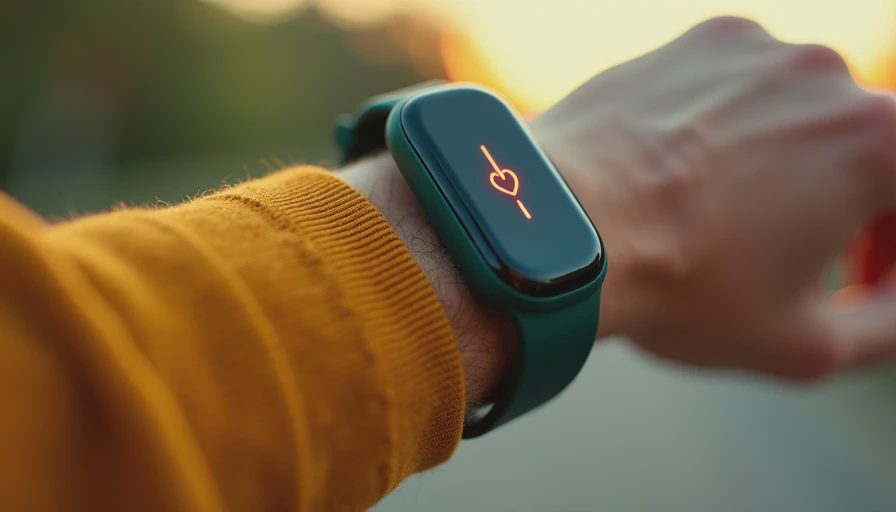
Where the best fitness tracker beats a smartwatch
A lot of buyers do not need a full smartwatch. They need a lighter device with longer battery life, simpler menus, and fewer distractions. That is where the best fitness tracker usually wins. A Fitbit Charge 6 sits in a reasonable middle zone for many people because it handles daily activity, sleep, and basic training without feeling bulky. A Garmin Vivosmart 5 is another straightforward option if you care more about training load and long battery life than app store extras. If you already live in the Apple ecosystem, an Apple Watch SE gives you stronger smart features, but you will charge it more often and you may pay for functions you never use.
For runners, I care about GPS consistency, interval alerts, and whether the app makes the data easy to read after a workout. For gym-goers, I care less about fancy running metrics and more about whether the device survives sweat, burpees, and repeated wrist movement. Water resistance, band replacement cost, and a screen you can read outdoors are small details that become big annoyances if they are wrong. The best fitness tracker is usually the one that removes friction from your actual life. When I coach runners, I look for devices that make it easy to see a seven-day trend without digging through five menus. That saves more time than another animation ever will.
Matching the device to your training style
A walker who wants health nudges has different needs than a marathon runner. If your main goal is movement, sleep, and general health, a tracker in the $80 to $150 range can be enough. If you run four days a week, spend more attention on GPS quality, battery life, and whether the companion app gives you clean weekly trends. If you lift, watch for automatic rep counting as a novelty, not a decision-maker. In the weight room, a steady heart-rate trend and good workout logs matter more than a perfect set counter.
This is also where people overspend. You do not need the flagship model just to count steps and nudge bedtime. Spend for comfort, battery, and the app you will open. Save the money if you only want basic wellness data. Spend a little more if you want training guidance you will actually use. I have seen plenty of people get better results from a midrange band than from a shiny watch they charge twice a day. A useful wearable should feel like a habit tool, not a hobby project.
A simple budget guide for real buyers
If you are shopping today, I would think in three lanes. Under $100, look for the basics done well: decent step tracking, sleep data, and a band you forget about after lunch. Around $100 to $200, you usually get better heart-rate handling, stronger apps, and more useful workout summaries. Over $200, you are paying for smoother interfaces, better ecosystem features, and training depth that starts to matter for serious runners.
The best fitness tracker is not the one with the longest spec sheet. It is the one that fits your wrist, your budget, and your habits. If you want more movement and better sleep, choose comfort and battery first. If you want training help, choose GPS and app clarity second. And if you are stuck between two models, pick the one you are most likely to wear on a random Wednesday, not the one that looks best in an unboxing video. That is usually the device that changes behavior.


No letters yet — pray write the first.