A fitness tracker should make your day clearer, not louder. I have worn enough of them over the years to know the first mistake people make: they buy the model with the flashiest screen, then ignore the one thing they wanted most, which is a reason to move, sleep, or recover better. If you are shopping for a fitness tracker, start with the behavior you want to change, not the gadget you want to show off.
The good ones do a small set of jobs well. They help you notice patterns in steps, heart rate, sleep, and training load. The bad ones drown you in numbers that look precise but do not change what you do on Tuesday afternoon. My rule is simple: if a wearable does not lead to a better decision, it is just a wrist decoration.
What a fitness tracker should actually measure
The useful numbers are the ones you can act on. Step count can help with general activity, heart rate tells you roughly how hard a workout is going, and sleep duration can reveal when a late night is catching up to you. I care more about trends across a week or two than one dramatic reading at 7 a.m. That is the core promise of a fitness tracker: it turns a vague goal into a pattern you can see.
For most people, resting heart rate is one of the best clues. If your usual morning number is 58 and it sits at 65 for several days, that can mean stress, illness, poor sleep, dehydration, or a hard training block. It does not mean panic. It means pay attention. The same goes for step count. A day with 4,000 steps is not a moral failure; it is just a sign that your normal routine got squeezed.
The other number I watch closely is sleep consistency. A band that shows you are going to bed an hour later all week is more useful than a perfect-looking sleep score from one night. Trust the trend, not the reading. That phrase has saved a lot of people from overreacting to a single low score.
What is worth paying for
Price matters, but only after you decide what you need. A basic band around $50 to $100 can handle steps, sleep, heart rate, vibration alarms, and app syncing. That is enough for plenty of walkers, casual gym users, and people who mostly want to stop doom-scrolling before bed. Move into the $100 to $200 range and you usually get better battery life, stronger app support, more accurate GPS on some models, and a more comfortable strap or screen.
If you run outdoors, built-in GPS is the feature that can justify more money. If you lift weights, automatic rep counting is nice but not magical. If you care about sleep, comfort matters more than flashy extras, because a bulky device that annoys your wrist will end up on the nightstand. Brands like Fitbit, Garmin, Apple, and Amazfit all sell something in this middle zone, and the best value is often not the newest launch but the model that has been discounted for a few months.
The right fitness tracker is the one that fits your routine and disappears when you are busy. That is why I am skeptical of overspending on premium finishes before you know whether you will wear the thing every day.
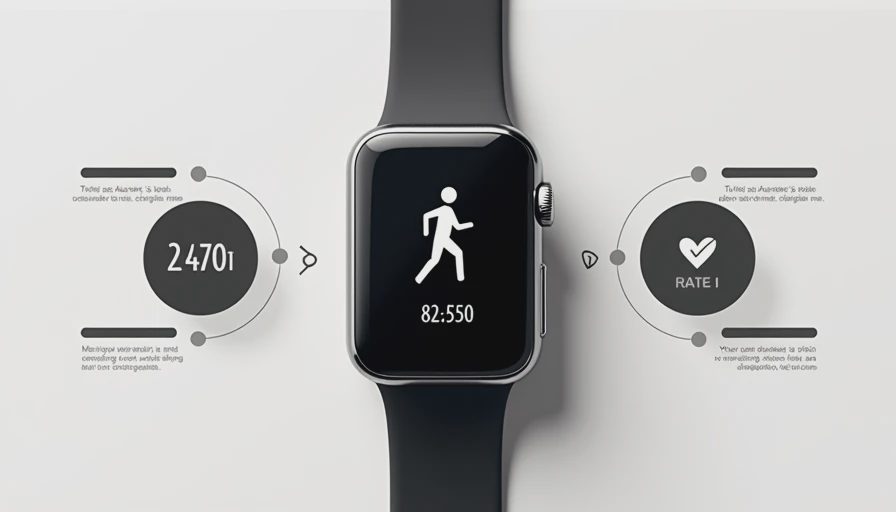
How to read the numbers without getting fooled
Heart rate readings can drift during intervals, cold weather, sweaty workouts, or when the band sits loose. Sleep scores are even shakier. A good wearable is not a lab-grade test; it is a decent guide that helps you spot a pattern. If your sleep score drops after three short nights, that is useful. If it bounces around because you woke up to use the bathroom, I would not build a story around it.
This is where a fitness tracker helps most: it gives you a nudge before you feel terrible. If your resting heart rate is up, your sleep time is down, and your usual walk feels harder than normal, you do not need a dramatic explanation. You probably need an earlier bedtime, more water, or an easier workout day. That is the kind of practical feedback people actually use.
Calorie burn is the number I trust least. It can be helpful as a rough context clue, but I would never use it to justify overeating or to punish myself after a long run. The same caution applies to recovery scores and readiness scores. They are useful when they reflect your broader pattern. They are noisy when you treat them like a final answer.
When a cheaper band is enough
If you only want more steps, better bedtime habits, and a simpler view of your day, cheaper bands are hard to beat. Fitbit, Amazfit, Xiaomi, and similar brands often have solid options under $100 during sales. They are not perfect, but they are good enough for a lot of people who mainly want reminders to stand up, move, and keep an eye on sleep.
A fitness tracker does not need a premium price tag to be useful. I have seen busy parents get more value from a $70 band than from a $400 watch, simply because the cheaper device was lighter, easier to charge, and less annoying to wear all day. That matters. A tool you tolerate beats a tool you admire in the box.
For a lot of readers, the smartest move is to buy the simpler device first and wear it for 30 days. If you find yourself wanting text replies, maps, music, or better app support, then step up to a smartwatch later. Until then, the humble band does the job just fine.
When a smartwatch is the better buy
If your needs go beyond activity tracking, a smartwatch can make more sense. Apple Watch is the obvious choice for iPhone users who want notifications, app support, and a polished experience. Garmin is a stronger fit for runners who care about battery life, training metrics, and reliable outdoor GPS. Samsung sits somewhere in the middle for Android users who want a familiar smart-device feel.
The line between a band and a watch is mostly about convenience. A watch can handle messages, calls, maps, and music. A band usually stays smaller, lighter, and cheaper. If you train often and care about pace, intervals, and battery life on long runs, Garmin has a strong reputation for a reason. If your goal is simply to keep daily movement and sleep on your radar, a band is usually enough.
I tell coaching clients to buy for the life they actually live. If your weekday is school drop-off, desk work, and a quick walk after dinner, you do not need every training feature under the sun. If you are stacking runs, lifting sessions, and weekend rides, then more advanced tools start earning their keep.
A simple way to choose without overthinking it
Start with your main job: sleep, walking, general health, running, or smart features. Set a budget before you browse. Then pick the model that gives you the fewest excuses to stop wearing it. That usually means solid battery life, a comfortable band, and an app you can understand in one minute instead of one evening.
If you want the blunt version, buy the cheapest model that still gives you reliable heart rate, sleep tracking, and a battery you do not hate. Spend more only when a specific feature will change what you do. That is the whole point. A good wearable should help you make one better choice today, then another tomorrow. Trust the trend, not the reading.


No letters yet — pray write the first.