If you have searched for normal resting heart rate after seeing a surprising number on your Apple Watch, Garmin, Fitbit, or Oura Ring, take a breath. One reading is rarely the whole story. Your heart rate changes with sleep, stress, caffeine, illness, temperature, hydration, medication, and recent exercise. The useful question is not whether your number matches someone else's. It is whether your own pattern makes sense.
I spent eleven years in cardiac rehabilitation, where people regularly panicked over readings that needed context rather than drama. I now coach everyday runners and wear fitness trackers for weeks at a time. My rule remains simple: trust the trend, not the reading.
What counts as a normal resting heart rate?
For most adults, a normal resting heart rate is commonly described as 60 to 100 beats per minute when you are awake and genuinely at rest. That range is a broad reference point, not a grade on your health report. A person who regularly runs, cycles, or trains aerobically may sit in the 40s or 50s without a problem. Someone who is recovering from an infection, sleeping poorly, or taking certain medications might temporarily run higher.
Age, fitness, genetics, body position, and emotional state all matter. Your pulse after walking across the room is not a resting measurement. Neither is the number displayed immediately after a hard interval, a hot shower, or an argument with your teenager. For a cleaner comparison, measure under similar conditions each time.
A normal resting heart rate also does not guarantee that everything is healthy, and a number outside a general range does not automatically mean something is wrong. Symptoms and changes from your established baseline deserve more attention than a single isolated result.
How to measure your baseline accurately
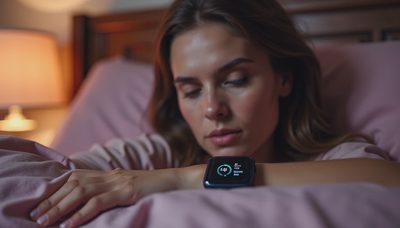
The easiest time to check a normal resting heart rate is in the morning, before coffee and before getting out of bed. Leave your watch snug but comfortable, remain still for several minutes, and record the result. If you are using your fingers, place two fingertips over the pulse on the thumb side of your wrist or beside your windpipe. Count beats for 30 seconds and multiply by two; if the rhythm feels irregular, count for a full 60 seconds instead.
Wearables are convenient, but they are not hospital monitors. Optical sensors shine light into the skin and estimate blood flow. A loose band, cold skin, heavy movement, tattoos, sweat, or a poor fit can interfere with the signal. Chest straps generally respond faster during exercise, while wrist devices are usually more useful for overnight patterns and broad trends.
For the most useful baseline, collect readings for seven to fourteen mornings and look at the general direction. A weekly average that moves from 56 to 64 beats per minute means more to me than one unexplained jump to 72. This is where normal resting heart rate becomes personal rather than generic.

Why your number changes from day to day
A higher normal resting heart rate can be an early sign that your body is working harder than usual. Poor sleep, alcohol, dehydration, heat, anxiety, and the first days of an illness can all push it upward. A demanding workout can do the same, especially when you stack hard sessions without enough recovery. In runners, I often see the number rise before the person admits that their legs feel flat.
A lower reading is not automatically better. Some athletic adults naturally have a low pulse, but a sudden drop accompanied by dizziness, unusual fatigue, fainting, chest discomfort, or shortness of breath needs medical attention. Certain heart and blood pressure medications can also lower pulse, so do not change a prescription based on watch data.
Sleep readings require extra context. Your pulse can fall during deeper sleep and rise during brief awakenings, dreams, illness, or a warm bedroom. Comparing a single overnight minimum with a friend's number is mostly noise. Compare your own overnight average across similar weeks instead.
When should you take a reading seriously?
Contact a medical professional if your resting pulse repeatedly sits above or below your usual range, particularly when the change persists or you have symptoms. Seek urgent care for severe chest pain, fainting, serious breathing difficulty, confusion, or a fast or irregular heartbeat that does not settle. Do not wait for a wearable alert to make that decision.
A normal resting heart rate is only one part of the picture. Blood pressure, symptoms, medical history, medications, and an examination can change the interpretation. Smartwatches can detect patterns and sometimes flag possible rhythm irregularities, but they cannot diagnose every heart condition. Treat an alert as a reason to follow up, not as a verdict.
If your number is elevated after a poor night, drink water, skip the hard workout, and recheck later under calm conditions. If it remains unusual for several days, write down the readings, symptoms, sleep, caffeine, alcohol, and training load. That short log gives a clinician something far more useful than a screenshot with no context.

Using Apple Watch, Garmin, Fitbit, or Oura without overreacting
Different devices calculate resting pulse in slightly different ways. Apple Watch may sample throughout the day and display a resting value in its Health app. Garmin often presents resting heart rate alongside overnight and training metrics. Fitbit emphasizes daily and sleep trends, while Oura puts considerable attention on overnight measurements. These numbers can be useful, but they are not perfectly interchangeable.
The best device is the one you wear consistently and understand well. I would rather have a basic Fitbit or an older Garmin with three months of clean data than a premium watch worn only during weekend runs. Check that the band fits securely, keep the sensor clean, and avoid comparing numbers taken by different devices on different wrists.
Use the data to make sensible decisions. If your usual normal resting heart rate is 52 and your tracker shows 64 for two mornings while sleep quality drops, an easy walk may be smarter than hill repeats. If the value returns to baseline, you have learned something useful. If it stays high or arrives with symptoms, move from self-tracking to professional advice.
A practical seven-day tracking plan
Start on a Monday and measure at the same time each morning. Record your pulse, hours slept, alcohol or unusual caffeine, exercise from the previous day, and any symptoms. Do not chase the lowest value by repeating measurements until you find one you like. Record the first reliable result and move on with your day.
At the end of the week, calculate a rough average and note the highest and lowest readings. A pattern such as 55, 56, 54, 57, 58, 61, and 60 tells a different story from a stable 60. The first pattern may reflect accumulating fatigue, a late night, or an oncoming illness. It is a prompt to look closer, not a diagnosis.
Bring that record to a clinician if the change persists, your rhythm feels irregular, or symptoms appear. Otherwise, use it to adjust recovery, hydration, sleep, and training. A normal resting heart rate is not a trophy to lower at any cost. It is a baseline that helps you notice when your body is asking for attention.



No letters yet — pray write the first.