Sleep tracking accuracy sounds like a straightforward scorecard, but it is usually better at telling you when you went to bed and when you got up than at naming every sleep stage. After weeks wearing Garmin watches, an Apple Watch, an Oura Ring, and a basic Fitbit, I kept coming back to the same rule: sleep tracking accuracy is useful when it helps you spot a pattern, not when it pretends to be a lab sleep study.
Consumer wearables are reading movement, heart rate, heart rate variability, skin temperature, and sometimes breathing patterns. That gives them a decent shot at spotting a restless night, a late bedtime, or a rough recovery week. It does not give them a perfect view of what your brain is doing. That matters because the body can look awake while the watch thinks you are dozing, and it can also look asleep while you are lying still scrolling in the dark.
Where the wrist does well
The strongest use of sleep tracking accuracy is basic timing. Most devices are pretty good at guessing when you fell asleep within a reasonable window, especially if your nights are boring and consistent. They are also useful for seeing whether your sleep got shorter after a travel day, a late meal, a hard interval workout, or a couple of drinks.
This is where the data starts earning its keep. If your usual sleep time is seven and a half hours and the watch keeps showing six on weeknights, that is worth paying attention to. If it shows a weird spike one night after you wake up at 3 a.m. to let the dog out, I would ignore it. In other words, sleep tracking accuracy is strongest when the question is Was last night different? not Did I spend exactly 87 minutes in REM?
Apple Watch tends to do well with convenience and ecosystem features. Garmin is often strong if you already care about training load and recovery. Oura is excellent for overnight wear comfort, which helps because a ring is easier to forget about than a watch. Fitbit still does the basic job for less money than the premium crowd, which is why it remains a reasonable entry point for a lot of people.
Where the numbers get fuzzy
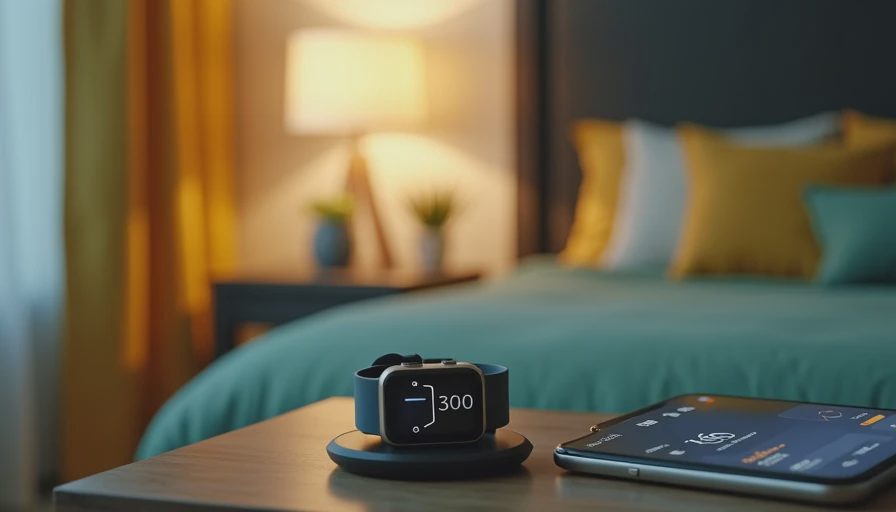
This is the part that trips people up: stage labels. Deep sleep, light sleep, REM, and awake are useful categories in a sleep lab, but on the wrist they are estimates. A wearable can infer likely stages from patterns in motion, pulse, and temperature, but it cannot see brain waves. That means the stage breakdown should be treated like a rough map, not a medical report.
If a device says you got only 18 minutes of deep sleep, do not automatically panic. If the same device keeps reporting low deep sleep for three weeks and you also feel wrecked, then the trend is worth a look. That is the whole game. Sleep tracking accuracy is not about perfect stage scores; it is about whether the score moves in a useful direction when your habits change.
I see the same thing with HRV and resting heart rate. A high resting heart rate after a poor night or a hard workout is often more informative than the exact sleep-stage split. If your numbers are ugly because you were sick, stressed, or jet-lagged, the wearable is still helping. It is just helping with the broad picture, not the microscopic one.
What the big brands usually get right
In sleep tracking accuracy, comfort and consistency matter more than a flashy algorithm pitch. Apple Watch is a good choice if you already live in the Apple ecosystem and want sleep data next to your activity and phone features. Garmin usually shines for people who also care about training load, recovery, and battery life. Oura Ring is the easiest overnight wear for many people, which means you are more likely to keep it on every night and get cleaner data.
Whoop is built around recovery and strain, and that can be useful if you like a subscription model and want a lot of overnight context. Fitbit is still the value play when someone wants the basics without spending smartwatch money. None of these devices is perfect, and none of them needs to be perfect to be helpful. The real question is whether you will actually wear it long enough for the trend to mean something.
That is why I tell runners and busy adults to buy for comfort first and dashboard second. A device that stays on your wrist or finger for 30 straight nights will beat a more advanced one you keep taking off after two evenings.
A practical way to improve the signal
The best sleep tracking accuracy starts with boring habits. Wear the device snugly enough that it is not sliding around. Keep the sensor clean. Charge it before bed so you are not taking it off at 2 a.m. on a low battery warning. And if your watch has a sleep schedule setting, actually use it.
The other big lever is consistency. Go to bed and wake up at roughly the same times, even on weekends, and your trends become much easier to read. Late workouts, alcohol, and heavy dinners all muddy the waters. I am not saying never have a glass of wine or run hills after work. I am saying do not pretend the wearable is broken when your routine is doing the talking.
For runners, one of the most useful habits is comparing sleep against the previous day’s load. A hard track session, a hot evening run, or a stressful workday can all show up in the overnight numbers. When you line those things up over two or three weeks, the picture gets clearer fast. That is also where sleep tracking accuracy becomes actionable: you can see which habits consistently help or hurt, instead of chasing one strange night.
How I read the trend in real life
If I am coaching someone, I do not care much about a single sleep score unless it matches the person’s actual energy, mood, and training response. A score can be low because the night was fragmented, because the watch fit poorly, or because the person was nervous about the score itself. The body is not a spreadsheet.
What I do care about is whether the trend agrees with reality. If the watch says sleep is getting worse and the person is dragging in workouts, that matters. If the watch says sleep was awful but the person feels fine and is recovering normally, I do not build a story around the number. That is how I use sleep tracking accuracy in real life: I compare the data with how the person actually feels, then I act on the pattern.
Trust the trend, not the reading.
Should you buy a wearable for sleep first?
If sleep is the main reason you want a device, I would start with comfort and battery life before I start arguing about stage algorithms. The best tracker is the one you wear every night. Rings usually win on comfort. Watches win if you also want exercise tracking, maps, and notifications. Budget bands can still be fine if you mainly want to see whether your routine is improving over time.
For shoppers, that means there is no need to jump straight to the flagship. An Apple Watch, a Garmin midrange model, a Fitbit, or an Oura Ring can all make sense depending on what else you want from the device. If you only care about sleep, a simpler option often gives you enough signal without turning bedtime into a science project. If you want one device for training and recovery, it is worth spending a little more on something you will actually keep on your wrist or finger.
The bottom line is simple: sleep tracking accuracy is good enough to guide habits, spot trends, and keep you honest. It is not good enough to diagnose why a single night looked odd. Use it to compare this week with last week, not to obsess over one score in the dark.

No letters yet — pray write the first.