If you have searched what is a dangerous heart rate after seeing an alarming number on your Apple Watch, Garmin, or Fitbit, take a breath. Heart rate is useful information, but one isolated reading rarely tells the whole story. The meaning depends on whether you were resting, exercising, sick, anxious, taking medication, or experiencing symptoms. Trust the trend, not the reading.
Start with what your heart rate is doing
For most adults, a resting heart rate between about 60 and 100 beats per minute is considered typical. Fit people, particularly endurance athletes, can sit below 60 without a problem. During sleep, some healthy adults briefly fall into the 40s or 50s. A low number is not automatically dangerous if you feel normal and it is usual for you.
The same principle applies to a higher resting number. Caffeine, dehydration, poor sleep, fever, stress, pain, nicotine, and some cold medicines can push your pulse upward. A reading of 95 after a rushed commute is not equivalent to a repeated resting rate of 115 while sitting quietly. Context is the first filter.
When people ask what is a dangerous heart rate, they often want one magic cutoff. Medicine is less tidy. A sustained resting pulse above 100, called tachycardia, deserves attention, especially if it is new. A resting rate below 50 can also deserve evaluation when it is accompanied by weakness, fainting, unusual fatigue, or shortness of breath. Your baseline matters more than a generic internet number.

When a fast heart rate needs urgent attention
A fast pulse becomes more concerning when it arrives with symptoms or does not settle after rest. Call 911 for chest pressure or pain, severe trouble breathing, fainting, blue or gray lips, confusion, or sudden weakness. Do not drive yourself if you feel as though you might pass out. These symptoms can signal a serious heart or circulation problem, and a wearable cannot safely rule one out.
A sustained resting heart rate around 120 or higher is a reason to seek prompt medical advice, particularly if it is unfamiliar. The exact number is not a diagnosis. A person with a fever may have a fast pulse for an understandable reason, while an irregular rhythm with a lower rate can still require urgent care. What is a dangerous heart rate depends on the complete picture, not only the display.
If your heartbeat feels suddenly irregular, fluttering, pounding, or like repeated skipped beats, note when it began and whether it is constant. Contact a clinician or urgent care service for guidance. If the sensation is paired with chest pain, fainting, or significant breathing difficulty, treat it as an emergency rather than waiting for the watch to finish measuring.
What exercise does to the number
Heart rate should rise during exercise. A simple age-based estimate for maximum heart rate is 220 minus your age, but it is only a rough training guide. Fitness, medication, heat, hills, hydration, and genetics all change the response. A 45-year-old runner reaching the 160s during a hard interval is not automatically in danger, while a pulse of 130 during gentle walking might be unusual for that individual.
During a normal workout, intensity should ease your pulse downward when you slow or stop. Recovery is more informative than chasing a perfect maximum. If your heart rate remains unusually elevated after several minutes of easy movement, or if you develop chest discomfort, faintness, severe breathlessness, or unusual weakness, stop exercising and get medical advice.
A useful way to judge what is dangerous during exercise is to compare the number with your symptoms and your expected effort. An easy conversation should not feel like a maximal effort. New exercise intolerance, repeated racing episodes, or a sudden change from your normal training pattern deserves a professional review before you resume hard sessions.

How accurate are smartwatch heart-rate readings?
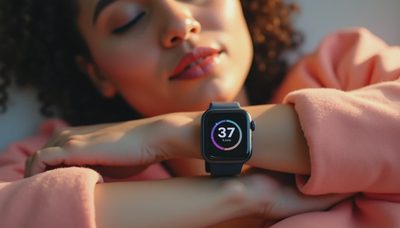
Wrist sensors are convenient, not infallible. Optical sensors estimate pulse by shining light into the skin and detecting blood-volume changes. A loose band, cold hands, sweat, motion, dark tattoos, skin contact problems, or rapid intervals can create gaps and false spikes. Chest straps generally respond faster during exercise, while a clinical electrocardiogram provides a different level of assessment.
If your watch shows an unexpected number, sit down, relax your arm, and measure again after a few minutes. You can compare it with a manual pulse at your wrist or neck, counting beats for 30 seconds and doubling the result. Do not press hard on both sides of your neck. If the device repeatedly shows a high or low reading, save the time, activity, symptoms, and medications so a clinician can interpret the pattern.
This is why what is a dangerous heart rate cannot be answered by a watch notification alone. Smart alerts are useful prompts, but they are not diagnoses. An alert without symptoms may reflect sensor error; no alert does not guarantee that everything is fine.
A practical response to a worrying reading
First, stop strenuous activity and sit somewhere safe. Second, check how you feel: chest pain, faintness, serious breathing trouble, confusion, or new weakness changes the urgency. Third, repeat the reading with a still arm and, if possible, a second method. Fourth, write down the value, time, activity, and symptoms. Finally, seek emergency help for severe symptoms or prompt clinical advice for a persistent, unexplained change.
Do not take an extra dose of a prescription heart medication unless your prescriber has specifically given you that instruction. Do not use someone else’s medication to slow your pulse. A clinician may review your history, perform an electrocardiogram, check blood tests, or look for triggers such as infection, anemia, thyroid problems, dehydration, or medication effects.
The number should serve you, not scare you
A wearable is most helpful when it reveals a pattern: several mornings of an elevated resting pulse, repeated irregular alerts, or exercise that suddenly feels harder. Record those trends instead of repeatedly refreshing the screen. If your usual resting rate is 58 and it sits near 85 for several days with fatigue, that is worth discussing even though 85 falls inside a broad reference range.
So, what is a dangerous heart rate? It is not one universal number. A persistent or sudden change, especially with chest symptoms, fainting, severe shortness of breath, confusion, or marked weakness, deserves urgent attention. Otherwise, repeat the measurement, consider ordinary triggers, and arrange medical advice when the pattern continues. Your watch can start the conversation, but your symptoms and a qualified professional should finish it.
No letters yet — pray write the first.